

Can one small change to lighting or pose make a generated image feel more real? That question drives many creators to test tools and platforms today.
You will learn how modern platforms use artificial intelligence to process your photo and deliver a new output. Know that speed, model choice, and editing options shape the final results.
Start by choosing a platform with strong privacy and clear consent rules. Use photos you own and read pricing and terms before you run any generator. Master the interface so you can tweak lighting, pose, and brush strokes for better transformation.
Many users seek a reliable nude maker tool for artistic work, but remember that realism and style depend on the model and the customization features. Small edits often yield cleaner images and a safer experience.
Key Takeaways
- Pick a platform that respects privacy and consent.
- Use owned photos and check pricing before you start.
- Tweak lighting, pose, and brush settings for better images.
- Learn the interface to control output and style.
- Model choice and speed affect final results.
Understanding the Fundamentals of AI Image Generation
To grasp how modern generators craft photorealistic output, you need to know what happens under the hood. This section breaks down the core concepts so you can set better expectations when you run an image through a platform.
The Role of Diffusion Models
Since the original DeepNude app appeared in 2019, the field shifted toward diffusion-based approaches. These models reverse a noise process to produce realistic textures and finer detail.
Diffusion systems are a major step in contemporary artificial intelligence technology. They let generators render skin, fabric, and shadow with far more nuance than earlier methods that gave pixelated results.
How Neural Networks Process Anatomy
When you upload an image, complex neural networks analyze structure and pose. The system predicts body shapes and surface cues to keep the generated character anatomically consistent.
This deep processing helps platforms interpret your input and decide how to blend features. Understanding these stages makes it easier to choose the right tools and platforms for a given generation task.
How to Improve AI Nude Quality Through Better Source Material
Good source material—sharp, well-lit photos with simple clothing—lets models render anatomy and texture more reliably. Use a high-resolution image so the platform can read fine edges and fabric. Modern browser-based tools in 2026 process photos faster, so upload the best file you have.
Pick a generator or maker that accepts high-res uploads and shows clear pricing. Check whether the tool stores content or requires consent for reuse. Protecting privacy matters for any art or personal project.
“The final output reflects the input—clear photos let models map shape and shadow with less guesswork.”
Many people find that platforms with advanced features for consent-based editing give the best experience. Test small edits and note how processing handles clothing and character shape.
| Factor | What to provide | Why it matters |
|---|---|---|
| Resolution | High-res JPG or PNG | Sharper detail for texture and edges |
| Lighting | Even, natural light | Reduces shadows that confuse models |
| Clothing | Simple, form-fitting garments | Helps the generator understand body lines |
| Privacy & Consent | Clear platform policies | Protects your content and rights |
Mastering Lighting and Composition for Realistic Results
A well-lit scene with clear subject separation helps processing tools render depth and texture more reliably. Good lighting and crisp framing let models read your input more accurately. That leads to smoother output and fewer artifacts.
Adjusting Contrast and Shadows for Depth
Start by balancing exposure and contrast on the original photo. Mild contrast boosts reveal edge detail while keeping shadow areas natural. This helps generation tools map form and shadow without guessing.
Most platforms take between 5 and 60 seconds for processing. Use that short window to test one change at a time. Tweak brightness, then run the same image to compare results.
- Use even, directional lighting to avoid harsh, confusing shadows.
- Keep the subject separate from busy backgrounds so models focus on contour.
- Try small exposure shifts rather than extreme edits to preserve skin tone.
“By controlling light and contrast, you let technology translate depth instead of inventing it.”
Many tools allow users to refine composition and crop before generation. When you control the source image, the final results look more natural and closer to the original photo.
Advanced Brush and Editing Techniques for Refined Outputs
Advanced editing tools let you fix details without redoing an entire transformation. Use precise brushes and targeted options to keep the original character of a photo while correcting problem areas.
Using Inpainting for Detail Correction
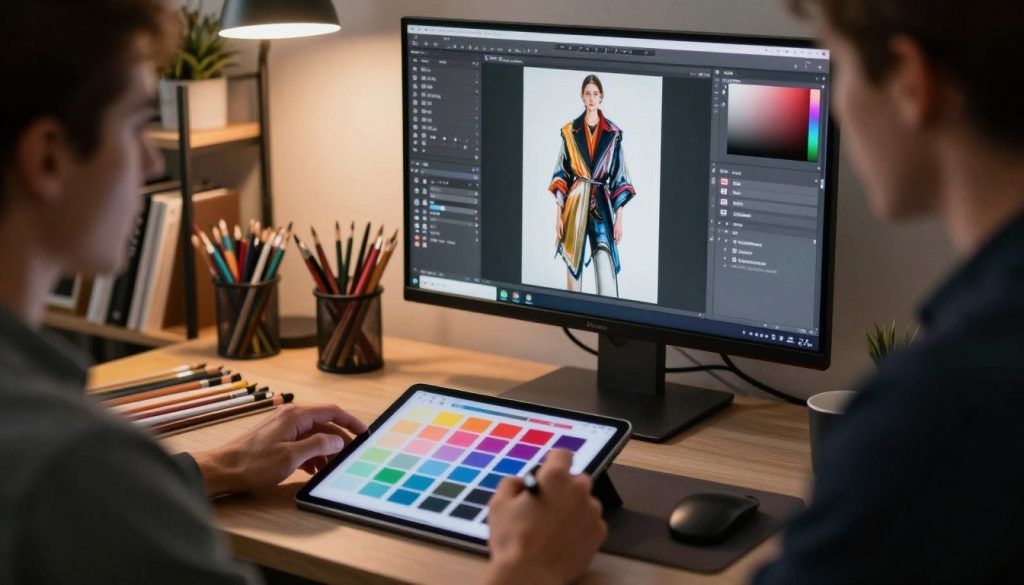
Inpainting lets you paint over small errors so the generator fills in only what you want changed.
Mask the area, pick a soft brush, and run a short pass. This preserves surrounding texture and speeds up iteration for users who need many versions.
Refining Skin Textures
Pick a platform with texture sliders and localized smoothing. Work in tiny patches and compare results after each pass.
Keep natural pores and avoid over-softening. That balance helps images stay believable and keeps the transformation faithful to the source.
Managing Resolution Upscaling
Use tiered upscaling: mild then fine. Upscale too fast and artifacts appear; go gradually to retain detail.
Services like Nu3Bt AI offer high-speed generation and referral programs that can reduce cost while you test modes and brush settings.
“Small, deliberate edits beat one large rewrite every time.”
- Favor tools that let you customize brush size and strength.
- Always verify consent and privacy before editing sensitive content.
- Test speed and mode to match your workflow for the best results.
Optimizing Poses and Body Structure for Natural Rendering
Opt for poses that reveal the character’s silhouette to reduce guesswork during generation.
Choose a clear, simple stance. A photo where joints and limbs are visible helps models map underlying anatomy. This reduces errors and gives you a more natural output.
Avoid complex foreshortening and extreme angles. Those positions force processing to guess depth and can distort the final image.
Before you run any tool, adjust the pose so the body lines are easy to read. Small tweaks save time and limit heavy edits later.
“A well-defined pose gives platforms the reference they need to render proportions correctly.”
- Pick a plain background so the subject stands out.
- Use a relaxed stance with visible joints and center the character.
- Check that your chosen platforms support the body type you want to render.
| Pose Tip | Why it helps | Platform check |
|---|---|---|
| Simple silhouette | Clarifies body outline for models | Confirm support for varied body types |
| Visible joints | Reduces anatomical guessing | Test a short generation pass first |
| Neutral background | Focuses tools on the character | Ensure upload limits and privacy rules |
Prioritizing Privacy and Ethical Standards in Your Workflow
Protecting people and their rights must guide every choice you make with these tools. Always confirm age limits and consent before you use any service that handles explicit content.
Keep your workflow simple and accountable. Pick a platform that posts clear policies about how photos and images are stored and deleted. Use only tools that let you remove uploaded files and that offer transparent options for consent.
“A responsible user checks terms, pricing, and deletion paths before any generation or editing pass.”
- Verify that all people in a photo gave consent.
- Choose a maker that focuses on user experience and clear privacy features.
- Read pricing and terms so you do not support services that misuse content.
| Risk | Check | Action |
|---|---|---|
| Age verification | 18+ requirement | Confirm ID process or deny access |
| Storage | Retention policy | Use tools with delete options |
| Consent | Consent workflow | Obtain written or recorded consent |
| Terms | Pricing & reuse rules | Review before you pay or submit photos |
Conclusion
A final review of source files and generator settings prevents costly rework and privacy slips.
Think of image generation as a process you manage. Check the model and mode you chose so the generation matches your intent. Use clear source files to guide the system and limit guesswork.
Pick tools that let you edit with fine control and protect the people in your photos. Keep one eye on pricing and retention, and one on consent when working with a nude image.
Good tools, steady workflow, and guarded privacy produce better results from generators. Choose a maker or platform that balances features with transparent terms so your content stays secure.
FAQ
What are the safest ways to prepare source photos for ClothOff model training?
You should collect high-resolution images with consistent lighting and neutral backgrounds. Use photos where subjects have given explicit, verifiable consent for editing and model training. Strip metadata only if you need privacy, and keep an audit log of permissions and file versions to stay compliant with platform policies.
How do diffusion models affect result consistency in image generators?
Diffusion models iteratively refine noise into an image, so results depend on the same seed, model checkpoint, and prompt settings. To get consistent outputs, fix the seed, choose a stable model version, and document prompt parameters like style, temperature, and sampler type.
What techniques improve lighting and depth without overediting?
Start with global exposure and white balance adjustments, then use localized dodge and burn to enhance form. Increase midtone contrast and add subtle rim light to separate the subject from the background. Keep edits subtle to avoid an overly processed look.
When should you use inpainting versus full regeneration?
Use inpainting for targeted fixes—small pose tweaks, background removal, or correcting artifacts. Choose full regeneration when the whole composition or anatomy is wrong. Inpainting preserves surrounding pixels and often yields quicker, more precise corrections.
How can you refine skin texture while avoiding artificial smoothing?
Work at high resolution and use texture-preserving tools: frequency separation, selective noise, and tiny-scale dodge and burn. Apply sharpening selectively on pores and natural features while keeping larger skin tone variations intact to maintain realism.
What are best practices for upscaling final images?
Use a dedicated super-resolution model that supports facial and anatomical detail. Upscale in small steps, check for artifacts after each pass, and apply mild denoising only where needed. Always compare against the original to ensure you keep natural textures.
How do you guide pose adjustments for more natural anatomy?
Reference anatomical guides or use 3D pose tools to plan proportions and joint placement. Make incremental changes and preserve limb junctions to avoid odd angles. If you use prompts, include clear pose descriptors and reference images for direction.
What privacy steps should you take when handling personal photos?
Obtain explicit consent and keep a record. Anonymize or remove identifiers when sharing assets. Use encrypted storage and restrict access to essential team members. If you publish or distribute results, confirm consent covers that specific use.
How do model versions and pricing affect your workflow?
Newer model versions can offer better fidelity and faster runtimes but may cost more. Test multiple checkpoints to balance cost, speed, and output quality. Track billing for high-resolution or many-iteration workflows to avoid unexpected charges.
What interface features speed up iterative editing?
Useful features include layer-based inpainting, non-destructive history, batch processing, preset lighting profiles, and side-by-side comparisons. Keyboard shortcuts and template prompts reduce repetitive tasks and help you maintain consistent results.
How do you ensure ethical use when sharing or publishing sensitive edits?
Only publish with documented consent and clear disclosures about edits. Avoid sharing images that could harm the subject’s reputation or privacy. Follow platform content policies and provide options for takedown requests.
Which prompt strategies improve stylistic control without overprompting?
Use concise descriptors for mood, lighting, and clothing style. Include camera and lens terms only when necessary. Keep a prompt library of proven phrases and avoid adding redundant adjectives that can confuse the generator.
How can you maintain natural color grading across multiple images?
Create and apply a consistent LUT or color preset. Match color temperature and contrast using a reference image. Batch-apply the same profile and fine-tune per image to correct for exposure or skin-tone differences.
What should you consider when selecting a generator for sensitive content handling?
Choose a vendor with clear content policies, solid privacy controls, and an audit trail. Prefer platforms that offer content filtering, consent verification workflows, and on-prem or private-cloud options if you need extra control over assets.
How do you balance speed and fidelity when producing final images?
Start with faster, lower-resolution passes to lock composition and pose. Switch to higher-fidelity models and more sampling steps for the final render. Reserve slow, meticulous adjustments for the last stages to save time during iteration.