


Do you really know where your private content goes when a model runs?
On March 24, 2026, this guidance was published to help you protect what matters. You will learn how to check your account preferences and tune the app so your personal content stays under your control.
Start by confirming that the service uses zero logs and local saves. These features stop generation histories from leaving your device. They help keep sensitive files from being stored on external servers.
Next, inspect the brush masking tools and the copilot workflow. Proper use reduces accidental exposure and gives you clear control over each operation.
Throughout this guide, you will see practical steps to verify the model you interact with respects your digital boundaries. Small changes in your settings can make a big difference in how securely your content is handled.
Key Takeaways
- Check zero-log and local-save options to keep data on your device.
- Adjust account permissions inside the app to limit access.
- Use brush masking and copilot controls to protect sensitive content.
- Verify the model’s data handling before you upload private files.
- Small configuration steps can prevent accidental exposure.
Understanding Privacy in AI Image Generation
Understanding how image-generation tools handle sensitive files is the first step to keeping your content secure. Apple’s Sensitive Content Warning requires iOS 17, iPadOS 17, watchOS 10, macOS Sonoma, or visionOS 2 or later to work.
This feature analyzes photos and videos on your device, not on a remote server. That means the system can blur or warn about potentially explicit material without sending an indication to Apple that nudity was detected.
Because processing happens locally, you can manage how apps show and filter personal content. Modern models and tools emphasize on-device handling to protect your data and improve user safety.
Keep your device software updated to ensure these protections work across apps. When your hardware runs the latest releases—such as macOS Sonoma—you get current safeguards for viewing and sharing media.
- On-device analysis: content is checked locally before display.
- App controls: you can manage filters and viewing behavior per app.
- Model design: many models now prioritize user control and safety.
Configuring Your AI Nude Privacy Settings
Take a moment to review how your profile routes content and what permissions are active.
To adjust data sharing for Microsoft Copilot, go to copilot.microsoft.com and sign in to your account. Open your profile and find the privacy controls. There you can change what the service may collect and share.
Distinguish whether your tools are managed by a work or school account or by a personal account. Organization accounts often enforce stricter controls and may block some prompts. Michael McGuire notes that knowing if a model is Microsoft-hosted or a local model helps when troubleshooting blocked content.
Review app permissions for each installed app and revoke access that is not necessary. Check that chat and upload history are disabled if you want local handling of sensitive content.
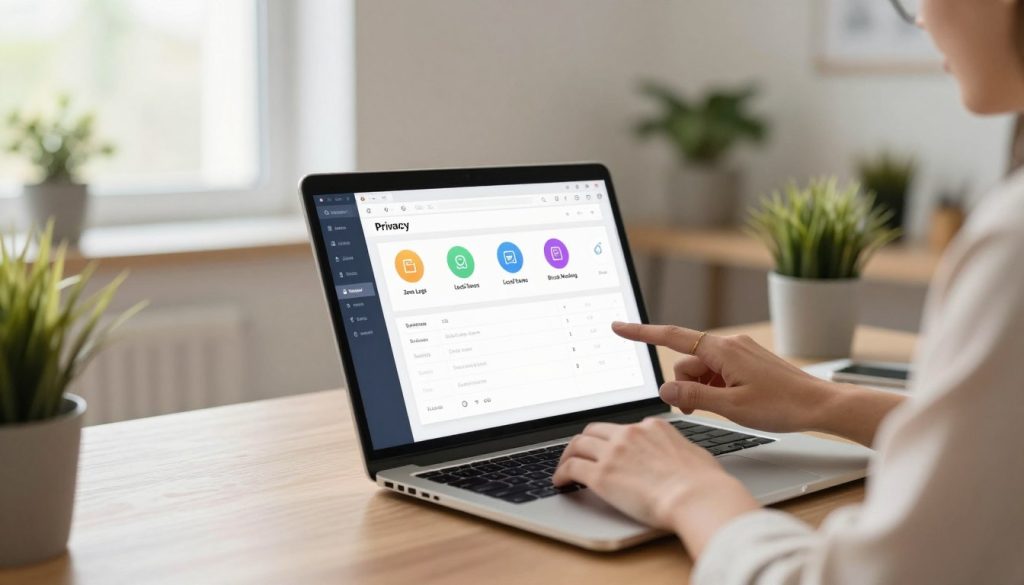
Quick comparison
| Account Type | Typical Controls | Action |
|---|---|---|
| Personal | Flexible, user-managed | Sign in, review privacy and history toggles |
| Work/School | Restricted, admin-enforced | Contact IT or review tenant policies |
| Local Model | No external logging | Confirm local-only processing in app |
- Tip: Audit each app so your content stays under your control.
Implementing Zero Logs for Data Protection
Make sure the service you choose has a clear no-storage promise for uploads and prompts. This step protects your account and keeps sensitive content off external servers.
Why zero logs matter: a zero logs policy ensures that generated files and prompts are not retained. That reduces the chance third-party models or apps can access your files later.
- Verify the provider’s published policy and any audit reports.
- Ensure your device setting prevents automatic backups of app data.
- Disable history or conversation saving inside each app you use.
“If nothing is stored, nothing can be leaked.”
Choose tools that publish explicit guarantees about deletion or non-retention. Then confirm those claims in your account and on the device. Small changes in configuration deliver big gains in safety for your content.
Utilizing Local Saves for Enhanced Security
When you choose local saves, your documents and images remain on the device you trust most. Keeping files on your home computer limits transmission to external services and reduces exposure.
Benefits of On-Device Processing
On-device processing gives you control. Generated content stays on your hardware rather than moving to remote models or public app servers. That lowers the chance of a breach or accidental sharing.
Configure the app to prefer local storage and disable history or cloud sync when you can. This simple change is one of the most effective steps to secure work produced by a model.
- Local saves stop files from being sent to cloud-based models.
- On-device work reduces reliance on third-party apps and servers.
- Saving locally cuts the attack surface for data breaches.
“Keeping content on your hardware is the fastest way to reduce external risk.”
| Action | Effect | Why it matters |
|---|---|---|
| Save to home drive | Files remain local | Prevents server-side retention |
| Disable cloud sync | Stops automatic uploads | Reduces exposure from apps |
| Choose local model | On-device processing | Data never leaves your device |
Audit your apps and confirm the settings that favor local handling. Doing so protects your content and strengthens overall privacy on the device you use every day.
Mastering Brush Masking for Content Control
Fine-tuning your brush mask gives you direct control over which areas of an image can be altered. This step is central to keeping your original files intact while producing the output you want.
Defining Masking Areas
Start by outlining the exact regions you want to protect or change. Use small strokes for delicate edges and broader strokes for backgrounds.
Tip: Zoom in to avoid accidental exposure of sensitive parts of an image. Accurate masks make later edits safer and faster.
Precision Editing Techniques
Adjust brush hardness, size, and opacity inside the app to match the object you are masking. A softer edge blends edits; a hard edge keeps boundaries strict.
Work in layers when possible. Isolate features on separate masks so you can edit one element without affecting others.
Preventing Unwanted Generation
Use masking as a gate: block areas you never want the model to change. Combine that with local controls on your device to limit what models can access.
“Isolating parts of an image gives you clear, repeatable control over results.”
- Set brush behavior to match the image detail.
- Save mask presets for repeatable workflows at home.
- Review each mask before generation to maintain strong content and privacy protection.
Managing Device and Account Safety Protocols
Lock down which tools can read files on your device before you start any sensitive project. Make this a routine so your account cannot be reached by unauthorized users.
Review app permissions regularly. Limit what each app can access. Remove permission for apps that do not need files, camera, or microphone access.
Use strict account controls. Turn on strong passwords and two-factor authentication. Restrict who can modify your settings and who can view saved content.
Keep apps up to date. Install security patches quickly. Developers release fixes that improve safety and close known issues.
- Audit installed apps: ensure each app follows your preferred privacy and storage rules.
- Revoke unused permissions: reduce the tools that can read or share data.
- Lock your account: use MFA and session management to block suspicious access.
“Regular checks and strict controls are the simplest ways to protect your work on a shared device.”
Conclusion
End each project by confirming that outputs remain on devices you control. This final check reduces surprises and keeps your work where you expect it.
Make it routine: review who can access files, confirm local storage, and close sessions when you are done. These small habits improve long-term safety.
When you follow the steps in this guide, your content stays more secure and easier to manage. Take time to learn how each tool treats your files and how you can limit exposure when you use them.
Staying informed and proactive will give you confidence to create and share without unnecessary risk.
FAQ
What is ClothOff’s approach to zero logs?
ClothOff keeps no activity records on its servers. That means the service does not store your input images, edit history, or usage metadata. Only transient data needed to complete a task is processed, then discarded, reducing the risk of exposure.
How do local saves improve your security?
Local saves store edited files on your device rather than in the cloud. This ensures you retain full control over copies and reduces reliance on remote storage. You can back up to your own drives or encrypted folders for extra protection.
What is brush masking and how does it protect content?
Brush masking lets you specify exactly which areas to modify or leave untouched. By isolating regions on the image, you prevent unwanted edits and keep sensitive parts under your control during processing.
How do you adjust data sharing preferences in the app?
Go to your account controls and locate the data sharing panel. From there, you can disable any telemetry or analytics, choose local-only processing where available, and limit third-party integrations that request image access.
Which platform permissions should you manage for safety?
Review camera, photo library, and microphone permissions on your device. Revoke access for apps that don’t need them. On mobile, use the operating system’s permission manager to grant access only when you’re actively using the feature.
How does zero-logging affect model improvements?
With zero logs, developers cannot collect user content for training. Model updates rely on synthetic datasets, opt-in contributions, or internal testing. You still receive security updates and feature enhancements without exposing personal media.
What are the benefits of on-device processing?
On-device processing keeps image transformations local, cutting latency and network dependency. It minimizes data transmission, preserves confidentiality, and often performs faster when your hardware supports it.
How do you define masking areas effectively?
Use the brush tool to trace around regions you want to protect or edit. Start with a larger stroke, then refine edges with smaller brushes. Zoom in for detailed areas to ensure accurate coverage without affecting other parts.
What precision editing techniques enhance results?
Combine brush masking with feathering and edge-detection tools. Work in short strokes and use undo to correct mistakes. Save interim versions locally so you can compare changes and revert if needed.
How can you prevent unwanted generation during edits?
Lock protected regions, enable local-only processing, and review any suggested automatic changes before applying them. Disable features that generate content outside your masked areas and confirm edits step by step.
What device safety protocols should you follow?
Keep your operating system and apps updated, use strong device passcodes, and enable full-disk encryption. Avoid installing untrusted software and check app permission lists regularly to ensure only necessary access is granted.
How do account-level controls help protect your media?
Use multi-factor authentication, set a strong unique password, and review active sessions and connected apps. Limit third-party access and revoke tokens for services you no longer use to prevent unauthorized retrieval.