


Can one photo really lock in a visual identity for all your project scenes?
You can. Ideogram Character lets you use a single reference photo to generate an ongoing look. This approach helps you keep your character identity steady across multiple sessions.
The trick is pose templates. They guide the image generator and the character generator toward the same proportions, expressions, and wardrobe. That means fewer surprises during later generation runs.
Professional creators use these tools to maintain a consistent look across multiple scenes and platforms. This guide will show you how to apply pose templates so your avatars stay recognizable through the whole project timeline.
Key Takeaways
- Use a single reference photo to preserve a character’s identity.
- Pose templates steer the image generator toward repeatable results.
- A dedicated character generator reduces variation across multiple sessions.
- Professionals rely on these methods to keep characters uniform over time.
- This guide explains practical steps to apply templates for steady generation.
Understanding the Importance of Consistent AI Characters
A steady visual identity helps your audience recognize the same person every time.
For professional storytelling, a consistent character matters. It ensures that the same face and style appear across scenes, posts, and marketing assets. When you maintain visual continuity, readers and viewers stay immersed in the narrative.
Ideogram Character offers a robust character generator that locks identity into each output. That prevents facial drift when you swap poses, outfits, or lighting. The result is dependable character consistency across images and video sequences.
Good consistency helps you build a brand mascot that audiences spot immediately. It also matters in game development, where designers must produce uniform assets for many scenarios. Without this control, models often alter facial features and break immersion.
- Professional standard: Keeps visuals uniform across projects.
- Audience trust: Viewers recognize the same person everywhere.
- Workflow stability: Reduces rework when scenes change.
Focusing on character consistency gives your work a reliable foundation. That foundation makes it easier to scale visuals while keeping the identity you designed intact.
How Character Consistency Works in Modern AI Models
Smart generators separate who a person is from how they are styled.
Defining Identity Preservation
Identity preservation locks facial details so each output matches your reference. Ideogram Character runs a dedicated step that pins those traits into every render. This prevents facial drift and saves you time during creation.
Style vs Character Reference
A character reference borrows a person’s identity. A style reference borrows a look, palette, or mood. Use both to guide the generator: one for who the subject is, the other for how they appear.
Pro creators rely on models like Nano Banana Pro and Seedream 4.0. These handle lighting and facial consistency more reliably. With precise prompts you can define age, personality cues, and small details.
| Model | Identity Lock | Style Handling | Best Use |
|---|---|---|---|
| Ideogram Character | Dedicated preservation step | High fidelity | Ongoing campaigns |
| Nano Banana Pro | Strong facial match | Good lighting control | Editorial shots |
| Seedream 4.0 | Stable identity across poses | Accurate palettes | Game assets |
Use the right tools and prompts so the model reads your reference correctly. That keeps character consistency and helps creators scale visuals without extra rework.
Preparing Your Reference Images for Optimal Results
Start with a clear, well-lit frontal photo to give the model a reliable map of facial structure.
Why quality matters: a high-quality reference image lets the character generator analyze curves, lines, and depth. That analysis helps the model reproduce the same identity across outputs.
Ideogram Character prefers frontal or 3/4 views. These angles show essential facial features like jawline, eye placement, and nose shape. Minimal filters and natural lighting make those features easier to read.
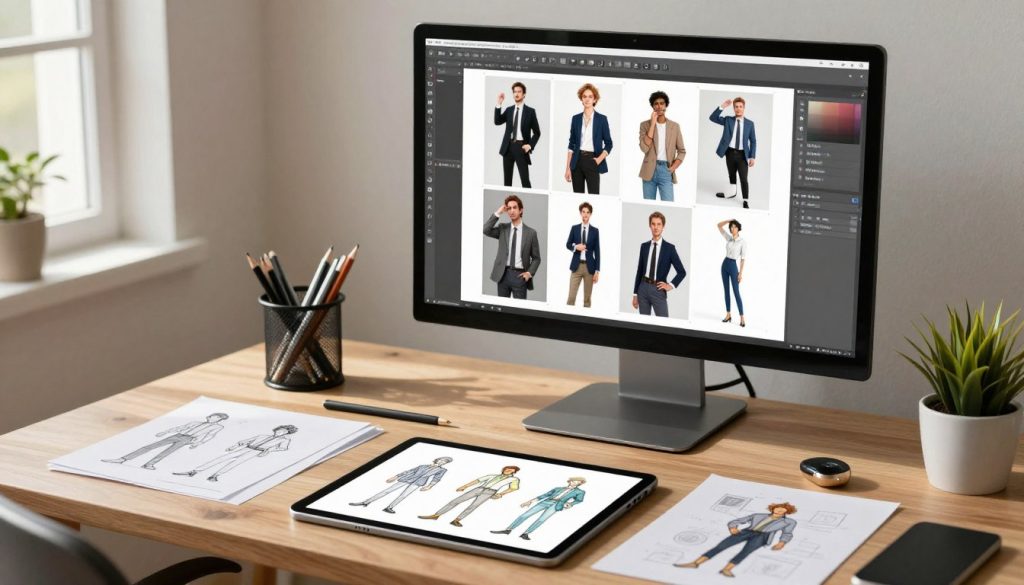
Tips to improve your photo:
- Use a neutral background to avoid distractions.
- Capture the face straight-on or at a gentle 3/4 angle.
- Avoid heavy makeup, extreme shadows, or strong filters.
When you focus on facial features in your reference image, the character consistency and identity hold up better across sessions. Good preparation equals better quality and fewer tweaks later.
Leveraging Pose Templates for Dynamic Performance
Pose templates let you place a single identity into many energetic setups with little effort.
Ideogram provides a library of ready poses that speed up your workflow. Use these templates to put your character into street shots, portraits, or staged action without redefining the face each time.
Why this helps: templates preserve core traits so face details hold steady during varied generation. That boosts character consistency across multiple scenes and saves time.
Mix built-in presets with your own prompts to explore fantasy figures or sci-fi avatars. The character generator lets you reuse a defined subject across editorial, cinematic, or product work.
“Pose templates make it faster to test mood, location, and motion while the identity stays locked.”
| Use Case | Benefit | Best For |
|---|---|---|
| Street-style | Quick placement, natural posture | Social feeds, lookbooks |
| Portraits | Stable facial focus | Profiles, editorial |
| Cinematic action | Identity holds during motion | Video sequences, trailers |
With templates you reduce retakes and keep your characters identifiable across projects. Use them to create reliable avatars that perform across varied scenes.
Step by Step Guide to Generating Consistent AI Characters
Follow a clear workflow so your character identity holds across multiple scenes.
Uploading Your Reference
Start by anchoring your project with a single, high-quality reference photo. Upload the reference image to the left panel so the model can map facial features and design cues.
Setting Prompt Parameters
Enter a detailed prompt describing appearance, mood, and wardrobe. Use the Expand Prompt feature to add specifics on age, pose, and lighting for better results.
Applying Style Filters
Apply LoRa style filters to improve overall quality and match your chosen style. Select a base model like Flux Dev or Flux Pro to generate consistent characters with higher detail.
- The free plan gives 3000 credits per month for multiple generations.
- The character generator can output up to four variations per generation to explore looks quickly.
Tip: Use your reference image to keep facial features accurate. This process helps creators generate consistent character images across multiple sessions and formats with better control and predictable results.
Refining Your Output with Advanced Editing Tools
Editing your renders directly cuts turnaround time and improves control over details.
Use Magic Fill to edit small errors in a photo or to remove misspelled text from a label. This tool saves you time by avoiding a full re-generation when only minor fixes are needed.
Modify the character mask to include or exclude jewelry, hair, or clothing. That targeted mask edit improves accuracy and keeps the core identity from changing across images.
Adjust prompts and seed values to control creativity and create variations while the model preserves the main look. Change material settings like PBR to boost lighting and surface quality for 3D outputs.
- Lower guidance for more experimental results; raise it for strict control.
- Switch seeds to generate subtle variations without losing the concept.
- Export in multiple formats so the asset fits your workflow and credits use.
“Refining output with precise tools lets you keep the intended character across each generation.”
High-quality generations take longer, but the extra processing time improves final detail. Use these tools to speed edits and keep your project on schedule while preserving visual quality.
Managing Character Variations Across Different Scenes
Keep a single visual identity intact as you move a character through different settings.
When you reuse a defined subject across multiple scenes, the goal is to preserve core identity while testing new contexts. OpenArt and similar platforms let you place the same reference into cinematic sequences or street-style shots without losing a recognizable look.
Maintain storytelling continuity by calling the reference explicitly in each prompt. Note lighting, wardrobe, and mood so the model reads the same cues across generations.
Practical steps to manage variations
- Anchor: reuse the same reference photo and seed when possible to generate consistent images.
- Adjust: change background, pose, or lighting but keep facial and wardrobe descriptors steady.
- Format: create presets for common styles so your workflow stays efficient across multiple teams.
“A reusable character lets you focus on scene composition instead of correcting visual mismatches.”
Marketers and creators use this process to build mascots and avatars that appear across marketing, product shots, and social campaigns. The character generator speeds production and keeps collaboration smooth, so you spend more time on story and less time on fixes.
Best Practices for Maintaining Identity in Commercial Projects
Commercial projects demand repeatable outputs that match brand guidelines.
Keep a clear reference file and a short style guide for each mascot. Upload your reference to the platform and lock it to the same seed when possible. This helps preserve the consistent character look across campaigns.
Use detailed prompts that note wardrobe, materials, and lighting. That level of specificity improves render quality and makes it easier to adapt the subject for packaging, web, and ads.
Upgrade to Basic, Pro, or Premium so you have commercial rights and enough credits for high-volume creation. The platform’s character generator supports multiple styles and materials, letting you reuse one identity across seasons.
- Anchor: keep the same reference and seed where possible.
- Document: save prompt variants for each campaign.
- Verify: run a test batch for packaging and web sizes.
“A defined visual system speeds production and protects brand recognition.”
Troubleshooting Common Issues with Character Drift
If your subject starts to shift between renders, a quick checklist can fix it fast.
Begin by checking the reference photo. Use a clear, well-lit frontal or 3/4 view so the model reads facial features correctly. A poor photo often causes identity drift in later generation.
Modify the character mask to include or exclude hair, glasses, or jewelry. Mask edits help the character generator focus on the face and improve overall quality.
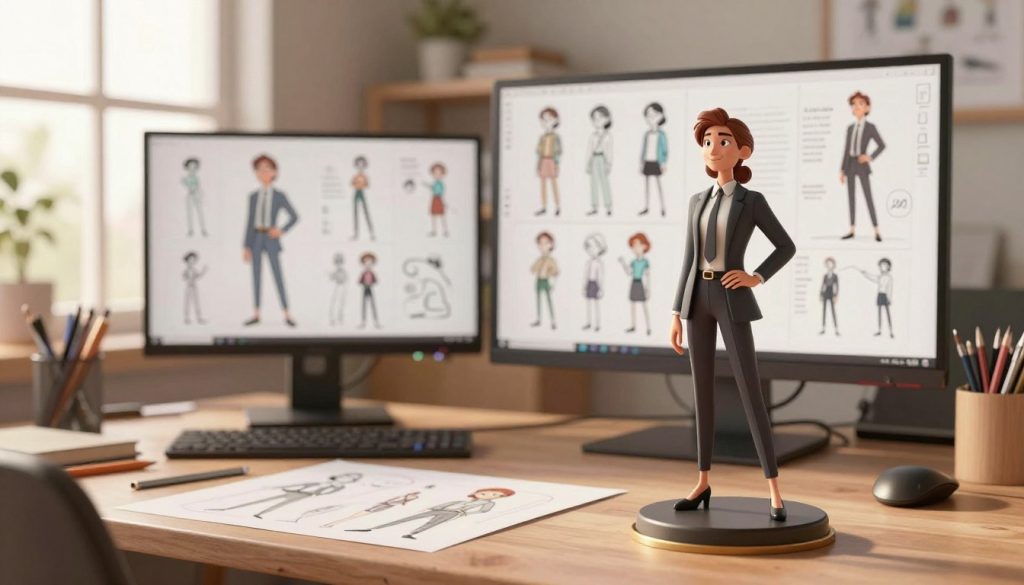
Write precise prompts that call out age, pose, and wardrobe. Clear prompts guide the image generator and reduce unwanted variations across images and scenes.
Generate multiple variations and pick the best results. Use Magic Fill to fix misspelled text or small errors without a full re-generation. That saves time and credits.
Tip: the tool analyzes your photo in detail. By focusing on facial features and using platform tools early in your workflow, you cut revisions and keep character consistency strong.
“Troubleshoot early with the right toolset to protect your identity across every generation.”
- Check photo quality first.
- Adjust masks for accuracy.
- Use clear prompts and variations.
Conclusion
To protect your visual identity, make the reference photo the single source of truth for all scenes.
Start every project by saving a high-quality reference photo and a brief style guide. Use a dedicated character generator and pose templates to place that identity into new shots without losing detail.
Apply targeted masks and advanced editing tools to refine output quickly. This limits drift, speeds revisions, and helps you keep a consistent look across campaigns.
Follow these practices and you will preserve the core identity through each session, scene, and asset in your creative pipeline.
FAQ
How do pose templates help you keep characters consistent across ClothOff AI sessions?
Pose templates give you a repeatable framework for body position, lighting, and camera angle. By reusing the same template, you reduce variation between sessions and maintain facial proportions and wardrobe fit. This speeds up production and helps your model preserve identity and style across multiple generations.
What is identity preservation and why does it matter for your projects?
Identity preservation ensures the subject’s unique facial features and proportions stay recognizable in every output. It matters because brand storytelling, marketing campaigns, and avatars rely on a stable look. Preserving identity protects continuity and avoids distracting changes that hurt user trust.
How should you choose reference images for the best results?
Pick high-resolution photos with clear facial details from multiple angles: front, three-quarter, and profile. Include varied lighting and expressions to give the model samples of how the subject looks in different conditions. Avoid heavy makeup, harsh shadows, or extreme filters that can confuse the generator.
What’s the difference between style reference and identity reference?
A style reference defines the visual treatment—lighting, color grading, wardrobe, and mood. An identity reference defines the subject’s facial structure, features, and proportions. Use separate images for each so the model can apply a consistent visual style without altering core identity cues.
How do you set prompt parameters to reduce drift and maintain continuity?
Use clear, concise prompts that lock key attributes: age range, skin tone, facial landmarks, and hair details. Add negative prompts to prevent unwanted changes. Keep prompts consistent across sessions and document the exact wording so you can reproduce outcomes reliably.
When should you apply style filters versus editing the reference images?
Apply style filters when you need uniform visual treatment across scenes, such as a cinematic or commercial look. Edit reference images only to correct exposure or remove artifacts. Filters can be layered without altering identity, while heavy edits to references risk shifting facial cues.
What workflow helps you manage variations across different scenes?
Create a master set with chosen reference shots, pose templates, and saved prompt presets. For each scene, document lighting, wardrobe, and camera settings. Use the same pose template and adjust only scene-specific elements so you maintain continuity and control variation.
How can advanced editing tools refine outputs after generation?
Use retouching tools to correct minor facial mismatches, align proportions, or adjust color grading. Tools with blend modes and face-aware adjustments are best because they preserve identity while fixing artifacts. Export layered files so you can revert or tweak changes later.
What are best practices for commercial projects requiring consistent identity?
Obtain model releases and maintain a style guide outlining acceptable alterations. Keep a versioned archive of references, templates, and final outputs. Work with professional photographers for reference shoots and standardize lighting and pose to reduce post-production work.
Why does character drift occur and how do you troubleshoot it?
Drift happens when prompts, references, or model parameters change between sessions. Troubleshoot by comparing prompt logs, reusing the original pose template, and verifying reference alignment. If drift persists, retrain with more targeted reference shots or lock parameters in the generation tool.
How many reference images should you provide to ensure reliable generation?
Provide at least three to five high-quality views covering front, three-quarter, and profile angles. More images help capture subtle expressions and lighting responses, which improves identity preservation. Balance quantity with quality—poor images can reduce accuracy.
Can you maintain continuity when changing wardrobe or hairstyles across scenes?
Yes—document exact wardrobe and hair descriptors in your prompt templates. Keep facial landmarks and proportions fixed while allowing controlled changes in clothing and hair. Pose templates and consistent lighting reduce perceived differences when outfits change.
What role does lighting control play in keeping appearances stable?
Consistent lighting preserves skin tone, shadow placement, and facial depth cues. Use the same key light angle and intensity across sessions or replicate it in software. Stable lighting minimizes subtle shifts that can make the face look different between shots.
How do you credit or track creative inputs when multiple tools and artists are involved?
Maintain a production log detailing reference sources, generator settings, pose templates, and editor notes. Include metadata in your files and use project management tools like Asana or Trello to assign ownership. This creates transparency and helps when revising or auditing assets.
Are there legal or ethical considerations when preserving identity for marketing or avatars?
Yes—always obtain written consent and model releases for commercial use. Be transparent about how images will be used, and avoid altering identity in a misleading way. Comply with copyright and privacy laws, and follow platform policies for synthetic media.