

The photo you undress matters more than the tool you undress it with — and the clothes in the photo matter more than the photo. The same body in a tight T-shirt and in a loose hoodie gives you two completely different results, because the model can only remove what it can see through: the shape of the body under the fabric, the skin the fabric leaves visible, and the edges where cloth meets skin. Get the garment right and the result looks like the person under the clothes. Get it wrong and the model has to guess.
This guide is about garments: what each type of clothing does to an undress result, which outfits give the cleanest output, and which ones to avoid. It is the practical half of choosing an input photo — the other half is light, pose, and framing — and it is the half most people get wrong, because they pick a photo they like instead of a photo the model can read.
Quick verdict
Tight, light-coloured, single-layer clothing gives the cleanest undress result: the model can read the body’s shape and the skin it needs to rebuild. Loose layers, dark heavy fabric, and busy patterns hide the body and force the model to guess. If the garment hides the shape, pick a different photo.
In this guide
- 1. Why the garment matters
- 2. Fit: tight beats loose
- 3. Fabric: thin beats thick
- 4. Colour: light beats dark
- 5. Layers: one beats three
- 6. Patterns and prints: plain beats busy
- 7. Necklines, sleeves, and hems
- 8. The best outfits, ranked
- 9. What to avoid, and what to do instead
- 10. Consent: the rule that decides everything
- FAQ
1. Why the garment matters
An undress model does not see through clothes. It reads the photo and rebuilds the body it thinks is underneath — from the shape the fabric shows, the skin the fabric leaves visible, and the edges where cloth meets skin. Every part of the garment is information: a tight sleeve tells it where the arm is, a visible collarbone tells it where the chest starts, a waistband tells it where the hips are. The more information the garment gives, the less the model has to guess.
That is why two photos of the same person can give completely different results. In one, a fitted dress shows the waist, the shoulders, and the line of the hips — the model has a map. In the other, an oversized hoodie hides the waist, the shoulders, and the hips — the model has a rectangle, and it has to invent everything inside it. The invented body is always a generic body. The map is what makes the result yours.
Think of the garment as a window. A tight, thin, light-coloured outfit is a clear window: the body shows through. A loose, thick, dark, layered outfit is a frosted window: the body is somewhere behind it, but the model cannot see it.
2. Fit: tight beats loose
Fit is the single biggest factor. A tight garment follows the body, so the photo shows the body’s real shape: the waist, the hips, the shoulders, the line of the back. A loose garment hangs from the body, so the photo shows the garment’s shape instead — a rectangle, a tent, a sack — and the body’s shape is hidden inside it.
That does not mean skin-tight. A fitted T-shirt, a bodycon dress, a pair of leggings, a swimsuit — anything that follows the body’s line — is ideal. A garment that is one size too big is already a problem: the fabric drapes, the waist disappears, the hips blur. Two sizes too big and the model has nothing to work with at all. The test is simple: can you see the waist in the photo? If yes, the fit is good enough.
One exception: a loose garment can work if the skin it leaves visible is enough — an open jacket over a fitted top, a loose shirt with the sleeves rolled up, a dress with a slit. The visible skin gives the model the anchors it needs. But the loose part still hides whatever it covers, so the result under it will be a guess.
3. Fabric: thin beats thick
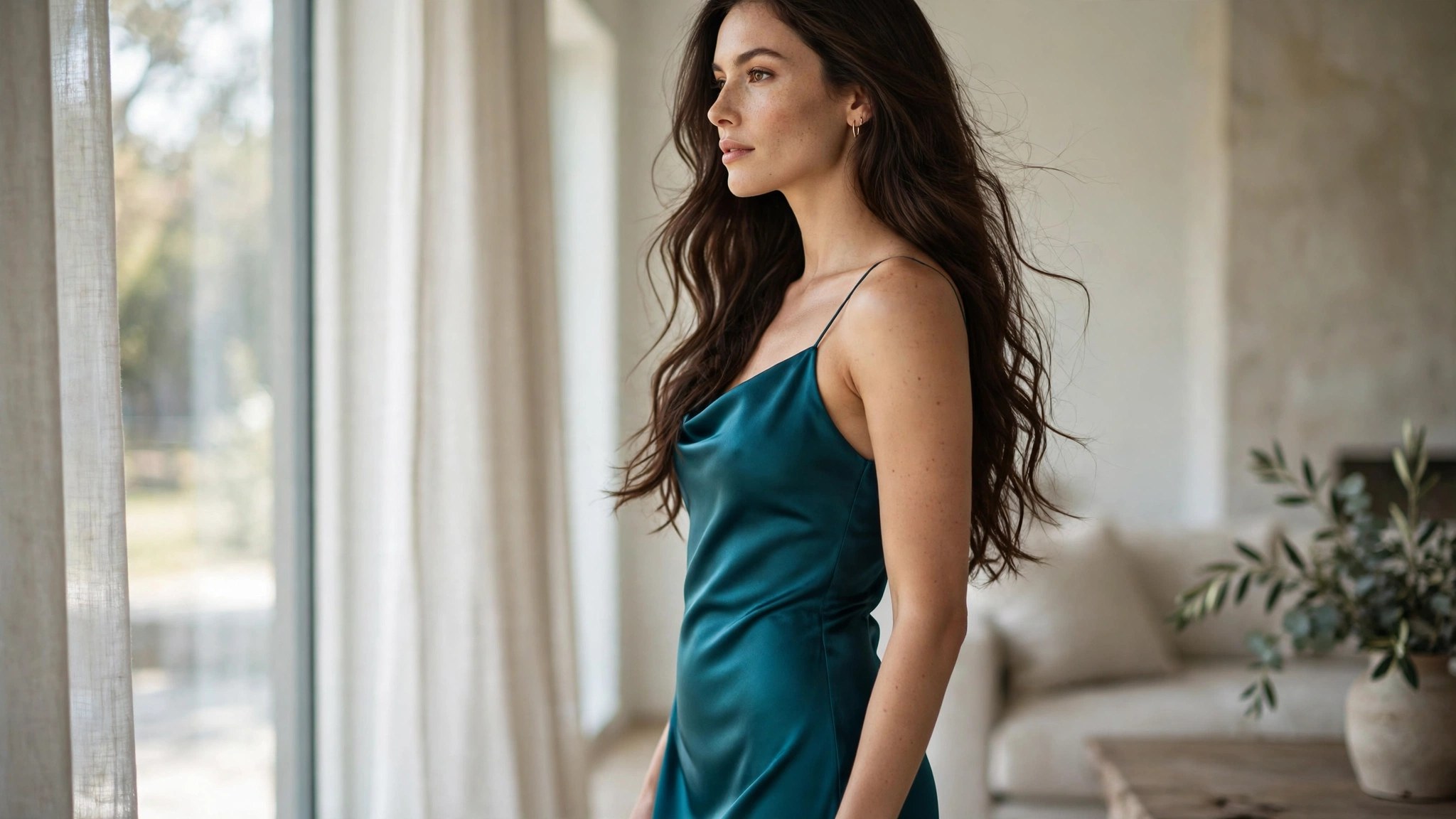
Fabric is the second factor, and it works the same way: thin fabric shows the body, thick fabric hides it. A thin cotton T-shirt, a silk blouse, a linen dress — the fabric follows the body’s curves. A thick knit sweater, a heavy denim jacket, a padded coat — the fabric holds its own shape, and the body disappears behind it.
Sheer and semi-sheer fabric is the best of all, for the obvious reason: the model can see the skin through it, which is the most information any garment can give. A sheer top over a camisole, a thin white T-shirt in bright light, a wet swimsuit — all of them show the body through the fabric. But sheer fabric is also the most revealing before you even generate, so use your own judgement about what to upload.
The worst fabrics are the ones that stand up on their own: heavy denim, thick wool, leather, padded jackets, and anything with structure — a blazer, a corset, a stiff dress. Structured fabric does not follow the body at all; it makes its own shape, and the model reads that shape instead.
4. Colour: light beats dark
Colour matters because the model reads edges, and edges are easier to see in light colours. A white or pale top against skin gives a clear boundary: the model can see exactly where the fabric ends and the skin begins. A black top against dark hair, or a dark dress in a dark room, gives no boundary at all: the fabric and the background blur together.
Light colours also show the body’s shape better, because light falls across them and makes shadows. A white T-shirt in sunlight shows the curve of the shoulder, the line of the waist, the fold at the elbow — each shadow is a piece of information. A black T-shirt in the same light shows nothing: black absorbs the light, the shadows disappear, and the body becomes a silhouette.
That does not mean you should only use white. Pale blue, cream, light grey, pastel pink — any light colour works, as long as it is lighter than the background and lighter than the hair. The rule is contrast: the garment should stand out from the background and from the skin, so the model can read the edges.
5. Layers: one beats three
Every layer is a piece of information lost. A jacket over a shirt over a camisole hides the body three times: the jacket hides the shirt, the shirt hides the camisole, and the camisole hides the body. The model has to guess through three layers, and the result is the most generic body the tool can make. One layer is ideal. Two layers is workable if the outer one is open — an open cardigan, an unbuttoned shirt, a jacket worn off the shoulders.
The worst layer is the one you forget about: a scarf, a belt, a bag strap, a necklace that sits across the chest. Each one covers a strip of the body, and the model has to invent whatever is under that strip. A belt across the waist is the most common: it hides the waistline, the single most informative line on the body.
If the photo has layers and you cannot retake it, use the brush: mask only the innermost layer — the camisole, the fitted top — for a cleaner target than masking the whole outfit. A smaller, cleaner mask beats a bigger, messier one.
6. Patterns and prints: plain beats busy
Patterns are noise. A busy print — florals, stripes, logos, text — covers the fabric with information that has nothing to do with the body, and the model has to separate the pattern from the shape underneath. A bold stripe across the chest can read as a shadow, a floral print can read as texture, a logo can read as a mark on the skin. The model does not know which marks are fabric and which are body, so it guesses.
Plain fabric is the cleanest input. Solid colours, no logos, no text, no bold graphics. If the outfit has a small logo, it is usually fine. If it has a large print, a slogan across the chest, or a high-contrast pattern, pick another photo. The exception is a pattern that follows the body — a striped top that bends with the waist, a fitted dress with a print that shows the curves. A pattern that follows the body is information, not noise.
7. Necklines, sleeves, and hems
The edges of a garment are the model’s anchors, and each edge tells it something different. A neckline tells it where the chest starts: a V-neck or a scoop neck shows the collarbones and the top of the chest, the most informative edge on the upper body. A crew neck or a turtleneck hides all of it, and the model has to guess the chest from the shoulders down.
Sleeves work the same way. Short sleeves show the arms, the shoulders, and the line where the arm meets the body. Long sleeves hide the arms entirely, and the model has to invent them — arms are one of the hardest parts to invent, because hands and elbows fail first. A sleeveless top is ideal; a short sleeve is good; a long sleeve is a problem, unless the sleeves are rolled up.
Hems are the same story for the lower body. Shorts and skirts show the legs and the line of the hips. Long trousers hide the legs, and a long skirt hides everything below the waist. The best lower-body input is shorts, a short skirt, or a swimsuit bottom. The worst is a long, loose skirt or wide-leg trousers.
8. The best outfits, ranked
Put it together and the ranking is clear. These are the outfits that give the cleanest undress results, in order:
- Swimsuit. Tight, thin, minimal coverage, maximum visible skin. The best input there is — if the photo is yours and you are comfortable uploading it.
- Fitted dress. Follows the body, shows the waist and hips, usually a clear neckline. The best everyday option.
- Tight T-shirt and shorts. Light, thin, fitted, and shows both the upper and lower body. The best casual option.
- Thin blouse and skirt. Light fabric, clear waist, visible legs. Good, as long as the blouse is not too loose.
- Leggings and a fitted top. Excellent for the lower body, good for the upper body. The top matters more than the leggings.
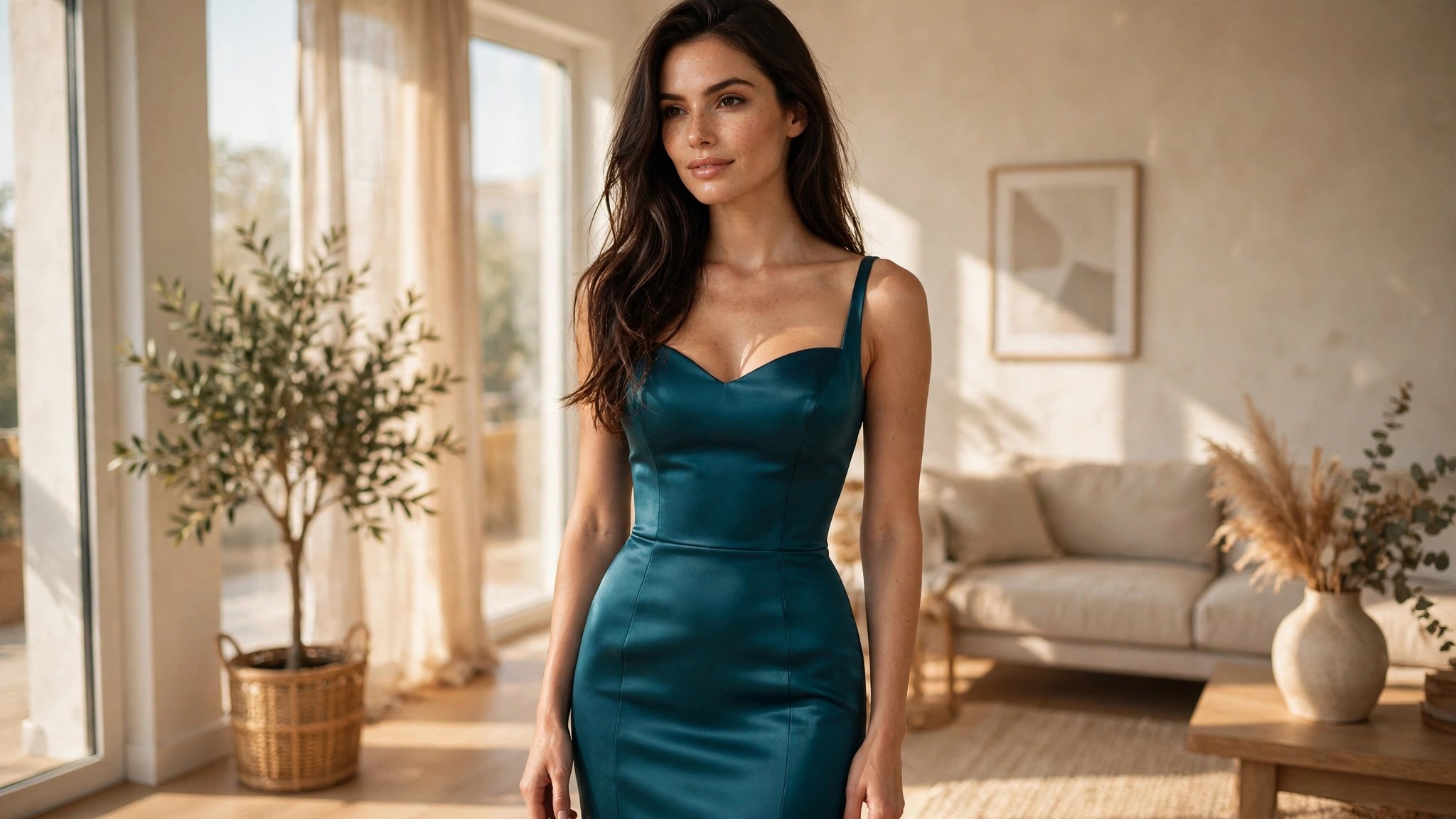
The common thread is not sexiness. It is information: tight, thin, light, single-layer, plain, with clear edges. A modest outfit that gives the model information beats a revealing outfit that hides the body. A fitted turtleneck and jeans is a worse input than a fitted dress — because the dress shows the body’s shape and the turtleneck hides it.
9. What to avoid, and what to do instead
The avoid list is short, and every item on it has a fix:
- Oversized hoodie or sweater. Hides the waist, shoulders, and hips. Instead: a fitted top, or the same photo with the hoodie unzipped and open.
- Dark, heavy jacket. Holds its own shape, absorbs the light. Instead: take the jacket off, or pick a photo without it.
- Three layers. Each layer is a guess. Instead: the innermost layer only, or mask just the fitted top with the brush.
- Busy print or slogan. Noise that reads as artifacts. Instead: a plain solid colour, or a different photo.
- Long sleeves and long skirt. Hides the arms and the whole lower body. Instead: rolled sleeves, or a photo in shorts.
- Belt, scarf, or bag strap across the body. Hides the waistline. Instead: a photo without it, or crop it out.
If every photo you have breaks one of these rules, break the least important one. Fit matters most, then fabric, then colour, then layers, then patterns. A loose white T-shirt beats a tight black blazer. A busy print in a fitted dress beats a plain oversized hoodie.
10. Consent: the rule that decides everything
Only undress photos of yourself, or of fictional adults. Never undress a photo of a real person without their consent — not a celebrity, not an acquaintance, not a stranger. Non-consensual undressing is not allowed, and a generated image is harder to take back than a photo once shared.
This is also practical, not just ethical: photos taken with consent are usually better inputs. They are shot properly, well lit, front-facing, because the person knew they were being photographed. A stolen or secret photo is usually dark, cropped, or shot from a bad angle.
FAQ
What is the best outfit for AI undress?
A swimsuit is the best input, then a fitted dress, then a tight T-shirt and shorts. The rule is tight, thin, light-coloured, single-layer, and plain — the outfit that gives the model the most information.
Does a loose hoodie ruin the result?
Mostly, yes: it hides the waist, shoulders, and hips, so the model has to invent the body underneath. If the hoodie is open over a fitted top, the visible skin gives the model enough anchors.
Do dark clothes make it worse?
Yes, usually. Dark fabric absorbs light and hides the body’s shape and the edges where cloth meets skin. Light colours show the shape better, as long as they contrast with the background.
How much does one undress cost?
About 21 credits per generation — roughly $0.42 on the $19.99 pack and $0.25 on the $59.99 pack. The generator shows the exact cost before you run it.
Can I fix a bad outfit with the brush?
Partly. Masking just the innermost fitted layer gives the model a cleaner target than masking a whole layered outfit. But the brush cannot add information the photo does not have.
Can I undress a photo of a real person?
Only with their consent: use photos of yourself, or of fictional adults. Undressing a photo of a real person without consent is not allowed.
Final verdict
The garment is the input. Tight, thin, light-coloured, single-layer, and plain gives the model a map of the body, and the result looks like the person in the photo. Loose, thick, dark, layered, and busy hides the body, and the result is a guess. Pick the photo by the outfit, not by how much you like the photo — and if the outfit hides the shape, pick a different photo.
Keep reading
- Generate Deepnudes Without Signup Using ClothOff AI
- ClothOff AI for Beginners: First Project Walkthrough (Upload → Result)
- Deep Dive into the ClothOff AI Interface: Brush, Modes & Seeds