

Curious how modern tools can strip pixels while protecting your data?
You navigate a fast-changing world of image tools that can create realistic nudes from photos. This article maps the landscape so you can see which platforms serve quality output and which respect your privacy.
ClothOff AI stands out as a leading tool for undressing technology, while AVCLabs PhotoPro AI gives users up to 30 tries for experimental nudity edits. You will learn how these image generators balance realism with safety and what that means for your data.
Throughout this short article, you’ll find practical advice on using a nude generator and an image generator in ways that reduce risk. Expect clear comparisons, privacy tips, and a guide to the technical capabilities shaping digital nudes today.
Key Takeaways
- You’ll learn which platforms lead the market and why ClothOff AI is prominent.
- AVCLabs PhotoPro AI offers limited trial runs for experimentation.
- The article explains how image generators balance quality with privacy.
- You’ll get practical steps to protect your personal data when testing tools.
- Understanding technical limits helps you make safer choices online.
Understanding the Landscape of AI Image Generation
Behind every convincing nude image is a layered process of input, modeling, and iterative refinement.
You start by selecting a source photo and defining the target style. The system then runs a model that predicts body shape, lighting, and skin texture to create photorealistic results.
Modern image generation technology uses deep learning to map anatomy and light. That lets you explore many art styles, from photorealistic portraits to stylized characters.
“These tools speed up creative work and let you iterate quickly while aiming for accurate detail.”
- Deep models predict form, shadow, and texture for realistic images.
- You can refine output with prompts, sliders, and manual touch-ups.
- The potential for high-quality content grows as networks improve accuracy.
| Stage | What Happens | Why It Matters |
|---|---|---|
| Input selection | Choose photo, pose, and reference style | Sets accuracy for anatomy and lighting |
| Image generation | Model predicts pixels and texture | Produces the first full render |
| Refinement | Tune details and correct artifacts | Improves realism and artistic control |
Top Picks for the Best Free AI Nude Generator
Some users prefer desktop apps for tighter control, while others like the convenience of browser-based platforms.
Desktop Solutions for Privacy
AVCLabs PhotoPro AI is a desktop image tool that keeps processing local for stronger privacy. It also supports 4x resolution upscaling so your images keep detail when you enlarge them.
This option suits people who want control over processing and file handling. Desktop apps limit uploads to external servers and reduce exposure of sensitive content.
Web-Based Platforms
Web platforms offer quick access and diverse features. Undress.app simplifies processing in the browser and gives control over body type and output style.
- Candy AI focuses on virtual companion interactions and paid extras for customization.
- Promptchan AI adds advanced video generation and text prompts for realistic images and art.
- Many sites offer trials or credit systems so you can test styles, models, and resolution without long-term commitment.
“Choose the workflow that matches your privacy needs and the level of control you want over final content.”
Specialized Tools for Virtual Companions and Art
You can combine face-swap and text-driven tools to make custom characters and short videos.
Many niche platforms focus on refined control so you shape images and motion the way you want. DeepSwap uses powerful refacing technology to place faces into popular clips and GIFs. That makes quick, realistic video edits easy to produce.
Seduced AI offers two modes: simplified for fast outputs and advanced for detailed tweaks. You can change hair color, body type, and clothing to match a chosen style or persona.
Customizing Your Digital Experience
On platforms like Candy AI you craft virtual companions that respond in roleplay and conversation. Those sites blend text prompts, image inputs, and model settings to generate cohesive content.
- Refacing tools speed video edits and enhance realism in short clips.
- Advanced modes let you tune resolution and finer style features.
- Text-to-image and art generator features help you design unique characters from prompts.
“By adjusting style settings and resolution, you can ensure the output matches your creative vision.”
How to Safely Process Your Own Images
Good output begins long before you press generate—preparation, careful editing, and controlled refinement matter most.
Preparing Your Source Material
Gather clear, well-lit photos and remove any blurry frames. High-resolution files give the model more detail and improve final resolution.
Crop to focus on the subject and keep backgrounds neutral. Proper prep reduces artifacts and speeds up processing.
Using Advanced Editing Tools
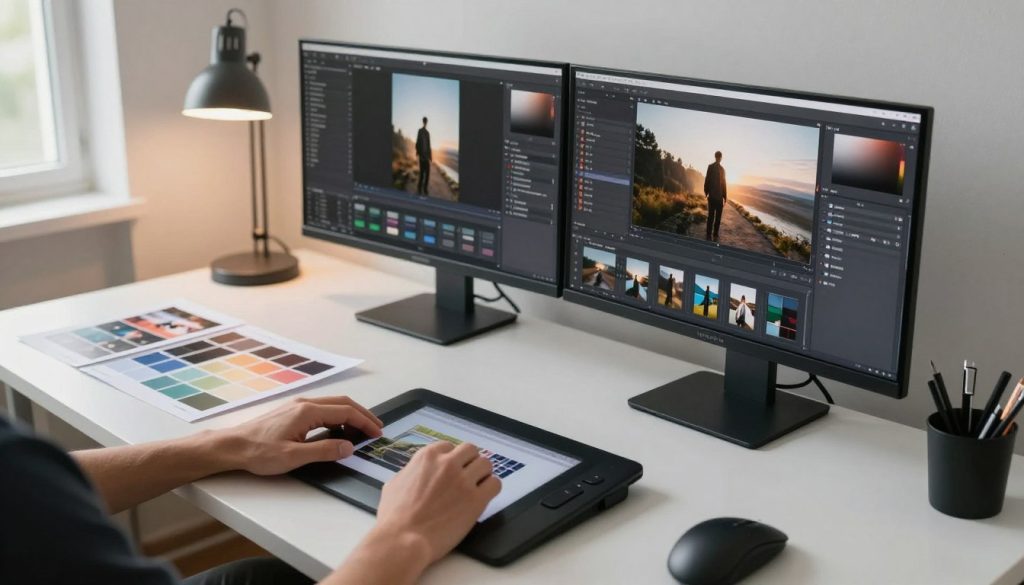
Use targeted selection tools to limit changes to specific areas of an image. For example, AVCLabs PhotoPro AI includes an object selection feature that helps with partial edits and precise masking.
When you rely on a web-based or free online tool, protect your privacy. Avoid uploading sensitive photos and check the site’s retention policy.
Refining Output Quality
Tune your text prompt to describe style, body, and clothing clearly. Small prompt edits can raise realism and match the art or image style you want.
After generation, perform post-generation editing to fix minor errors. Maintain control at every step so the final content meets your quality standards.
“Start with strong inputs and keep control during edits to get reliable results.”
- Clear photos + good light improve model performance.
- Use object selection to refine precise areas of an image.
- Adjust prompts and perform post-editing to raise final quality.
Navigating Privacy and Legal Risks
When you work with sensitive images, a single upload can have long-term consequences for privacy and safety.
Know the law and act responsibly. Creating or sharing explicit images of minors is a serious crime across the United States and abroad. You can face criminal charges and civil liability if you use someone’s image without consent.
Privacy rules may hold you accountable when an image leaves your device. Many web services store uploads on external servers, so always review terms of service and retention policies before you send files.
Be aware of the potential legal risks tied to generating nude content and videos. It is illegal in many jurisdictions to make or distribute fake explicit images of real people without clear permission.
“Protecting your identity and the privacy of others is the most important step when exploring these powerful tools.”
- Understand laws on consent and image distribution in your state.
- Check what data an image generator stores and how long it keeps content.
- Limit uploads, blur faces, or use local processing to reduce exposure.
Stay informed: the legal landscape for image and art creation is evolving. What is allowed today may face stricter rules tomorrow, so prioritize safety and respect for others at every step.
Conclusion
Choosing the right workflow helps you get quality images while keeping control of privacy.
You can use an image generator or an image editor to craft realistic images and videos. Pick a platform and settings that match your privacy needs and the level of control you want.
strong, Keep prompts clear, prepare good photos, and perform careful editing to raise quality and resolution. Use desktop processing when possible to limit uploads and reduce risk.
Remember legal and ethical limits. Stay responsible, respect consent, and update your habits as models and tools evolve toward 2026.
FAQ
What should you know about ClothOff AI and similar platforms?
ClothOff AI is one of several tools that use image synthesis and style-transfer technology to create realistic photos and art. You should verify platform credentials, review sample output quality, and check privacy policies. Compare processing methods (local vs. cloud), available styles, and controls for resolution, body proportions, and skin tone to match your needs.
How does image-generation technology work in these tools?
Most services rely on generative models that combine a text prompt and image seeds to produce images. Models use trained weights, latent spaces, and upscaling to refine details. You can usually guide results with prompts, reference photos, and sliders for lighting, pose, and realism versus stylized output.
What desktop options help protect your privacy?
Desktop solutions that run locally avoid uploading sensitive files to servers. Look for open-source projects or commercial apps that offer on-device inference, encrypted storage, and export-only workflows. Running models on your own GPU reduces exposure and gives you full control over source images and generated files.
Are there web-based platforms worth considering?
Yes. Web platforms are convenient and often provide strong user interfaces, templates, and presets for different looks. However, they typically process images on cloud servers, so review terms of service, retention policies, and whether the site shares data with third parties before uploading personal photos.
What specialized tools help create virtual companions or artistic characters?
Tools that focus on character design offer rigging, expression presets, and repeated-style consistency across images. They let you customize facial features, body types, wardrobes, and poses. For art-focused work, check for brush-style rendering, texture control, and options to export high-resolution assets for further editing.
How do you prepare source material for best results?
Start with high-quality, well-lit photos that show the subject clearly. Crop and align images to focus on the subject, remove distracting backgrounds, and ensure consistent perspective across reference shots. Clear metadata and simple backgrounds help models interpret key details accurately.
Which advanced editing tools improve the final images?
Use layered editors like Adobe Photoshop or Affinity Photo for targeted retouching, color grading, and compositing. AI-based upscalers and denoisers can raise resolution and reduce artifacts. Masks let you preserve intended areas while altering others, and non-destructive workflows help you iterate safely.
What steps refine output quality after generation?
Start with multiple passes and variety in prompts or seeds. Use upscaling to enhance detail, then apply local touch-ups for anatomy, skin texture, and lighting. Compare iterations, keep a log of effective prompts, and combine elements from different outputs to achieve the best final image.
What privacy risks should you consider?
Risks include unauthorized retention of uploaded images, model training on user content, and potential data breaches. Check whether a platform deletes files after processing, supports account deletion, and offers end-to-end encryption. For sensitive content, prefer local processing or strict, transparent cloud providers.
Are there legal and ethical issues you must be aware of?
Yes. Laws vary by jurisdiction regarding explicit content, consent, and likeness rights. You must have consent from any identifiable person in source photos. Avoid generating images that depict minors, non-consensual content, or copyrighted characters without permission. Review local statutes and platform rules before creating or sharing images.
How can you protect your anonymity and data when using online services?
Use disposable accounts, remove EXIF metadata from source files, and avoid linking personal payment methods if platform policies are unclear. Prefer providers that offer automatic deletion, minimal logging, and clear privacy guarantees. When possible, process sensitive material on your own device.
What technical specs matter when choosing a tool?
Look for control over resolution, output format, and rendering speed. Check GPU requirements, supported file types, and whether the tool offers model selection, seed control, and prompt weighting. Higher VRAM and better upscalers will yield more detailed results and faster iterations.
Can you reuse prompts and settings across different images?
Many platforms let you save prompt templates, presets, and model parameters. Reusing proven settings helps maintain visual consistency. Still, small adjustments are often needed to adapt to different source photos, poses, or lighting conditions.
How should you store and manage generated images securely?
Use encrypted local storage or a secure cloud service with strong access controls. Keep backups offline or on encrypted external drives. Label files clearly, maintain version history, and restrict sharing to trusted collaborators to reduce accidental exposure.
Where can you learn best practices for prompts and styles?
Community forums, tutorials from established artists, and vendor documentation are good resources. Study examples that match your intended style, experiment with descriptive prompts, and keep a library of effective prompt phrases. Practice and iteration remain the fastest way to improve outcomes.