


Can an app that promises to “undress” a photo change how we think about privacy and harm? This article looks back at how clothoff rose from a niche tool to a headline-making service over the past year.
Reporting has placed the app at the center of two major incidents — in Almendralejo, Spain, and at Westfield High School, New Jersey — as concern about deepfake pornography grew. Operators stayed anonymous, even using distorted voices and a reportedly AI-generated CEO to hide identities.
At a high level, “nudify” technology uses artificial intelligence to change images quickly. That speed and scale let images spread far faster than earlier methods. The result: more victims and a bigger public outcry.
This article is not a how-to. It is a reporting-driven, accountability-focused look at how the app works, how images move online, who may run the service, and how hidden payment routes keep it running.
Key Takeaways
- The piece traces Clothoff’s rapid rise and why it matters now.
- It explains “nudify” AI tools and how they scaled abuse.
- Two headline cases show harm is global and affects everyday people.
- The article maps infrastructure, alleged operators, and money flows.
- This is an accountability-focused investigation, not a guide.
What ClothOff Is and How the App Works Across Websites
What looks like one simple app often runs across dozens of near-identical websites and mirror domains. The service presents itself as a fast, consumer-facing tool that can turn ordinary photos or pictures into explicit outputs using AI.
How users interact: visitors land on a clothoff website, see an “over 18” click-through, and are shown sexualized examples without meaningful age or ID checks. A 60 Minutes segment and researchers noted the gate is a simple click-through, not real verification.

At a basic level, users upload a photo or picture and the app returns a generated nude image. The first time is often free; after that, credit packs cost roughly $2–$40 depending on the site. The Guardian reported about £8.50 for 25 credits.
Features like a “poses” option can fabricate more explicit scenes than the original image implied. Platform text warns about consent and says processing minors is impossible, yet reporting documents incidents involving minors.
- Multiple clothoff sites make takedown and payment blocking harder.
- Low-cost credits and fast automation increase the risk of widespread abuse.
“An 18+ click-through is not the same as real age verification,”
clothoff and the Human Impact of Nonconsensual Deepfake Pornography
A single generated photo can ripple through communities, triggering panic, shame, and legal action.
The Almendralejo case in Spain: schoolgirls targeted in WhatsApp groups
In Almendralejo, a mother discovered a realistic explicit fake of her 14-year-old daughter circulating in a school WhatsApp group.
The shock at how lifelike the images looked led to panic attacks, refusal to attend school, blackmail, and public bullying of the girls involved.
Westfield High School in New Jersey: lawsuits and community fallout
In the United States, students at a high school faced similar attacks with generated nude images shared among peers.
That incident prompted a civil lawsuit and helped push bipartisan attention to deepfake pornography and protections for minors.
How content spreads: social media posts, accounts, and reuploads to adult content sites
Once the images exist, time works against victims. Copies are reposted to social media, burned through anonymous accounts, and reuploaded to adult content sites.
- Private chats → peer-to-peer sharing
- Social media “before/after” posts
- Reuploads to pornographic platforms and searchable archives
| Spread Vector | Typical Accounts | Impact |
|---|---|---|
| WhatsApp groups | Classmates, peers | Immediate local bullying |
| Social media | Public & burner accounts | Wider visibility, viral risk |
| Adult sites | Porn platforms, reupload bots | Long-term searchable archives |
“The realism makes it feel real to victims, even when everyone knows it’s fabricated.”
Who Runs ClothOff: What Investigations Found About Names, Emails, and a Fake CEO
Investigations traced a tangled web of accounts, emails, and travel posts that aim to hide who actually runs the service.
Anonymity by design
Operators used deliberate methods to avoid accountability: distorted voices, minimal ownership disclosures, and shifting domains made it hard for regulators to follow up.
Belarus-linked names
Published reporting linked two names to operations: Dasha Babicheva and Alaiksandr Babichau. Investigators carefully attribute these ties to screenshots and message trails rather than direct proof of legal responsibility.
Recruitment and mirrored sites
Recruitment ads directed applicants to an AI-Imagecraft email. A near-duplicate site, A-Imagecraft, listed Babichau and accepted the same login credentials, suggesting shared infrastructure.
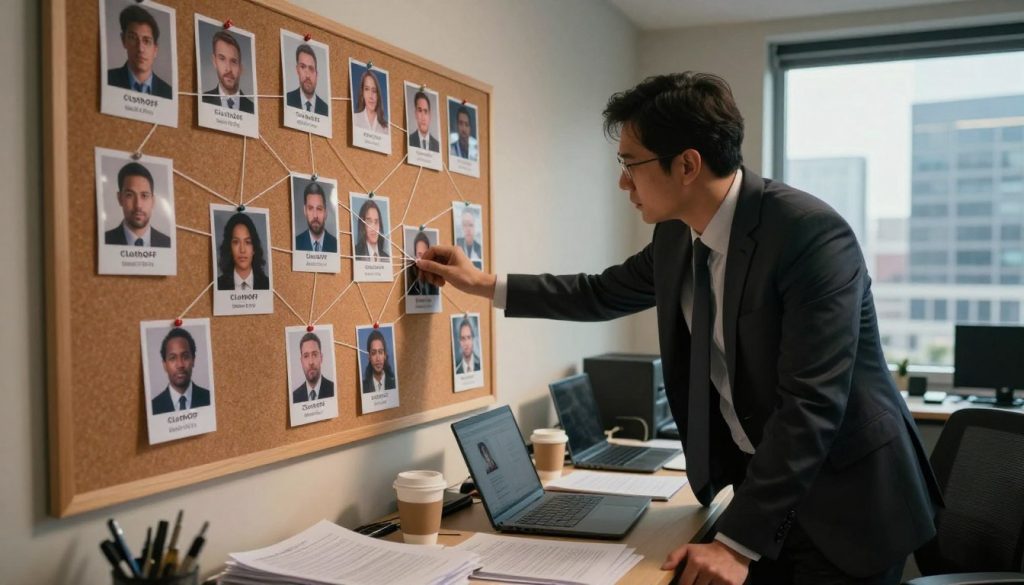
Telegram clues and travel overlaps
Telegram posts used display names like “Al.” Travel timestamps from Macau and Hong Kong overlapped with posts on an account tied to Babichau, a circumstantial link investigators noted.
Developer and company traces
Reports say a developer named Alexander German uploaded site code to GitHub and later deleted it. Links to the gaming marketplace GGSel were reported; GGSel denied involvement.
Press contacts and media response
Journalists were given a press contact email for questions. Responses were limited or evasive, and one episode involved an AI-generated CEO voice — a stark reference point for how identity can be manufactured.
Why names matter: without clear operator identities, enforcement, takedowns, and victim support become harder, and the same network can reappear under new names.
Following the Money: Redirect Sites, Payment Workarounds, and Shifting Business Addresses
Behind the checkout buttons, payments are routed through disguised storefronts that mask what customers actually buy. This model turns the sale of sexualized images into a repeat-purchase business, sold in small credit packs for quick revenue.
How the redirect trick works: a customer clicks to buy credits on one website, but the card or Google Pay charge posts under a different site’s name. That second site often poses as a harmless shop — flowers, lessons, or digital goods — to keep mainstream processors like PayPal from flagging transactions.
Payment processors and takedowns
PayPal says it bans offending merchants and closes redirect accounts when found. But new storefronts appear fast, so enforcement is a repeated cycle over time.
London shell signals
Investigations traced some payments to a London-registered company called Texture Oasis. Reporters noted copied staff lists and lifted website text, which raised red flags about a shell-like company presentation.
Shifting names and misdirected addresses
Sites repeatedly swap footer names and an address. When media contact companies listed in footers, those firms often denied any link and were later replaced. A Buenos Aires address tied to “Grupo Digital” led journalists to an unrelated office; staff there said they had no connection.
“When name, site, and address keep changing, tracing harm and holding a business to account becomes much harder.”
Clothoff said its holding company oversees multiple businesses and cited NDAs for not disclosing owners. That claim does not provide a verifiable way for victims, journalists, or regulators to follow the money.
| Mechanism | Effect | Why it matters |
|---|---|---|
| Redirect storefront | Charge disguised | Masks true website and business |
| Swapped footer names | Confusion for contact | Blocks accountability |
| False addresses | On-the-ground misdirection | Stops quick investigation |
Conclusion
Conclusion
What this article shows is simple: over the past year deepfakes moved from headline events to an everyday threat that can target ordinary people with a single photo.
The pattern is clear. A quick website or app entry point, repeatable outputs, and a shifting network of sites and companies let content spread fast and stay online for a long time.
Victims face real harm—reputation damage, school disruption, and anxiety that images will never fully disappear. Investigations surfaced names and company clues, but ownership stays opaque. That opacity is part of the business model.
If you see explicit material on social media, don’t repost. Document, report to platforms, and contact support services like the Cyber Civil Rights Initiative (US) or the UK Revenge Porn Helpline. As AI tools evolve, transparency, enforcement, and survivor-centered resources will shape whether the next year brings stronger safeguards or more scalable abuse.
FAQ
What is Uncovering the Past of ClothOff?
Uncovering the Past of ClothOff is an investigative summary that traces how a web app and related sites evolved, who appears connected to them, and how those services were used to create nonconsensual images. The report compiles evidence from websites, GitHub uploads, social media accounts, and payment records to map the platform’s history and public impact.
What ClothOff Is and How the App Works Across Websites
ClothOff is presented as an AI-driven image tool that works across multiple domains and app skins. It asks users to upload photos, then applies models to generate edited or synthetic images. The same backend and codebase often power several sites, meaning the app experience can appear on different branded pages while using shared infrastructure and payment flows.
How do users generate nude images from photos and pictures using artificial intelligence?
Users upload a photo and the app runs AI models to remove or alter clothing, producing explicit output. These tools rely on machine-learning image models and prompt templates. Some sites offer quick processing by converting uploads into deepfake-style nude images without meaningful consent checks.
Are age gates and “over 18” prompts effective at preventing minors from being processed?
No. Age gates and simple “over 18” prompts are easy to bypass and do not verify identity. Investigations found claims that processing minors was impossible, but those claims conflicted with distributed samples and reports showing underage victims. Robust verification is largely absent across these services.
What human impact has nonconsensual deepfake pornography caused?
Victims endure emotional trauma, reputational harm, and harassment. Nonconsensual images can spread quickly on social media, messaging apps, and adult content sites, amplifying distress and complicating takedown efforts. Communities and schools can suffer long-term fallout when such content targets minors or local students.
What happened in the Almendralejo case in Spain involving schoolgirls?
In Almendralejo, reports describe schoolgirls targeted in WhatsApp groups where explicit synthetic images circulated. The case highlights how quickly deepfake images can move through private chats and the difficulty families face getting platforms or law enforcement to act promptly.
What occurred at Westfield High School in New Jersey related to explicit deepfakes?
At Westfield High School, students and community members reported explicit deepfakes and related harassment. The situation prompted local outrage and, in some instances, legal action. The case illustrates community fallout, school disruption, and the complex legal questions surrounding synthetic sexual content.
How does content spread after creation — social media posts, accounts, and reuploads to adult content sites?
Once created, images move rapidly via screenshots, reposts, and direct uploads. Perpetrators post to social networks, Telegram channels, and adult sites. Accounts often reupload material across platforms, sometimes through coordinated groups, making removal and attribution difficult.
Who runs ClothOff and what did investigations find about names, emails, and a fake CEO?
Investigations found opaque ownership, shifting identities, and a publicly named CEO who appears to be a front. Contact emails and press routes often point to generic inboxes. Researchers traced links to individuals and aliases that suggest a complex network rather than a single accountable operator.
What does “anonymity by design” mean for these services?
“Anonymity by design” refers to deliberate measures—distorted voices in calls, misleading company data, and hidden ownership—that hinder tracing operators. This design makes it harder for journalists, victims, and authorities to identify responsible parties or hold them accountable.
Which Belarus-linked names and people were tied to operations?
Reporting flagged Belarus-linked individuals including Dasha Babicheva and Alaiksandr Babichau as connected to project infrastructure and accounts. These links came from passport scans, staff listings, and account metadata that suggested ties across site registrations and payment channels.
What recruitment trails and connected sites were discovered, such as AI-Imagecraft and A-Imagecraft?
Investigators found recruitment posts, shared login patterns, and similar UI across sites like AI-Imagecraft and A-Imagecraft. These patterns indicate the same teams or contractors may have built and maintained multiple front-end sites while using shared code and credentials behind the scenes.
What clues were found on Telegram and in travel overlaps about the “Al” founder reference?
Telegram messages, channel membership, and travel-record coincidences pointed toward an “Al” founder reference used internally. Travel overlaps between account holders and related phone numbers helped build a timeline of movement that aligned with site launches and updates.
What developer and company links surfaced, like GitHub uploads and connections to GGSel?
Public GitHub repositories contained code snippets and upload timestamps matching site updates. Some branches referenced tools and modules linked to GGSel and other developer handles, suggesting code reuse and collaboration among small development teams supporting the ecosystem.
How did press and contact routes behave when media asked questions?
Press inquiries usually routed to generic contact emails or public relations addresses. Responses, when they arrived, were vague or defensive, sometimes pointing to privacy policies or asserting compliance. In several instances, media outreach revealed mismatched ownership claims and evasive answers.
How are payments routed through phony sites to access PayPal, cards, and Google Pay?
Operators often set up intermediary landing pages or mimic legitimate storefronts to collect card payments and funnel funds to PayPal or Google Pay accounts. These workarounds obscure the final recipient and complicate chargebacks, making it harder for victims to track where money moved.
What London shell-company signals were found, like Texture Oasis and copied staff lists?
Some sites listed London-based shell names such as Texture Oasis and showed staff lists copied from other firms. These signals suggest attempts to create a veneer of legitimacy. Cross-checks found matching names and roles reused across unrelated companies, indicating fabricated corporate profiles.
How does address misdirection work, such as footers listing unrelated companies and the Buenos Aires “Grupo Digital” claim?
Footers often list addresses or company names not linked to the site’s operators, including claims of affiliations like a Buenos Aires “Grupo Digital.” These misdirections make it harder to trace real offices or owners and give the impression of an established company when none exists.
What should victims and concerned users do if they find nonconsensual images online?
Victims should document URLs and screenshots, report content to platform abuse teams, and contact local law enforcement. Legal aid organizations and digital safety groups can help with takedown requests. Preserve evidence and avoid sharing images further, as reposting can worsen harm.
How can platforms and payment processors improve responses to this kind of abuse?
Platforms should strengthen age verification, speed up takedowns, and improve reporting flows for synthetic sexual content. Payment processors can close accounts tied to abuse, enhance merchant vetting, and cooperate with investigators to trace funds to operators.
Where can journalists and researchers find more detailed documentation and contacts?
Look for investigative reports published by major outlets, public GitHub repositories tied to the sites, and verified court filings in cases involving deepfakes. Contact emails and press pages listed on sites offer starting points, but independent verification is essential before citing names or claims.