

Rask dom: One good undress is five things, not one: an avatar, a video first frame, a reference for the next generation, a comparison shot, and an archive keeper. The trick is to decide the five uses before you generate, because a result shot for one job rarely fits another. Plan the uses first, generate once, and the rule pays off — one image, five uses, and no re-runs.

Contents:
- 1. The Undress Is Not the End of the Job
- 2. Five Uses, Compared
- 3. Use 1: The Avatar
- 4. Use 2: The First Frame
- 5. Uses 3, 4 og 5: Reference, Comparison, Archive
- 6. What It Costs
- 7. Honest Limitations
- 8. Who This Is For
- 9. Consent and Safety
- 10. FAQ
1. The Undress Is Not the End of the Job
Most people treat an undress result as a finished product: generate, look, move on. That wastes the most expensive part of the process. The generation cost 21 credits and a minute of your time, and the result is a high-resolution image of a body in a pose in a light you chose. That image can do more than sit in a folder: it can be the face of a profile, the first frame of a clip, the reference for the next five generations, the “before” in a comparison, and the keeper you come back to in a month.
The reason most results only do one job is that they were shot for one job. An undress made to be reused needs different choices: a clean background so it can be cropped, a face that survives being shrunk to avatar size, a pose that can move, and a file name that tells you what it is for. None of those choices cost anything extra — they just have to be made before you generate, not after.
This article is about the five uses and the small decisions that make each one possible. It is about getting more from the generation you already paid for — every use after the first one is free.
2. Five Uses, Compared
Not every result fits every use. A face that survives as an avatar may be too small to work as a video frame. A pose that animates well may be too busy to use as a reference. The table is the planning tool: read it before you generate, and pick the uses your result is meant to serve.
| Use | What it needs from the result | Extra credits | Best when |
|---|---|---|---|
| Avatar | Clear face, clean background, head and shoulders readable at small size | 0 | You need a profile picture or a character image |
| Video first frame | Simple pose, clean anatomy, plain background | 351 (5s) / 561 (8s) | You want a short moving clip from the still |
| Reference | Consistent face, pose and light you want to repeat | 0 | You will generate variations of the same character |
| Comparison | Same input, different settings, side om side | 21 per extra version | You are testing what a setting changes |
| Archive keeper | Your best version of an input you care about | 0 | You want to find it again in a month |
Three uses are free and two cost credits. The avatar, the reference and the archive keeper cost nothing beyond the original 21 credits, because they are the same file used three ways. The video first frame is the expensive one: 351 credits for 5 sekunder, 561 for 8 sekunder, on top of the 21 the still already cost. The comparison costs 21 credits per extra version. The free uses should be decided before you generate, because they cost nothing to set up and everything to retrofit.
The most common mistake is to generate first and decide later. A result with a busy background cannot become a clean avatar, because the background does not disappear when you crop. A result with a complicated pose cannot become a good first frame. Decide the uses first, and the generation will serve them. Decide them later, and you will generate again — the 21-credit tax this article exists to remove.
3. Use 1: The Avatar
An avatar is the hardest use to retrofit and the easiest to plan. It needs three things: a face that reads at 100 pixels wide, a background that does not fight the face, and a crop that keeps the head and shoulders. A full-body undress fails as an avatar because the face is ten pixels wide by the time the image is shrunk.
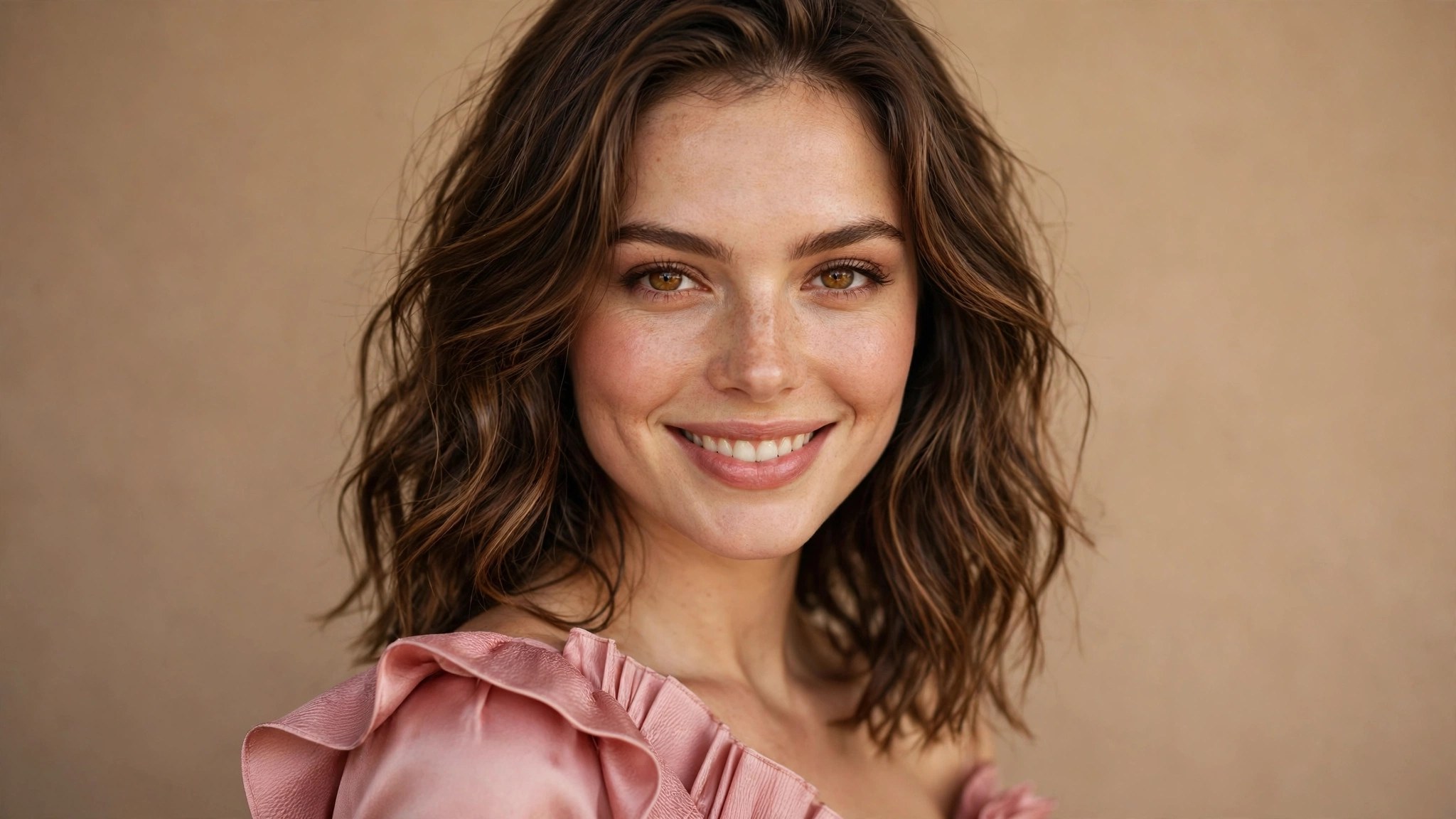
The test is the thumbnail test. Shrink the result to the size of a profile picture and look at it. If the face is still readable — eyes, mouth, expression — it works as an avatar. If the face turns into a smudge, the result was framed for a full-size look, not for a small one. The fix is in the input, not in the crop: shoot the input photo closer, with the face large in the frame, and the undress will inherit a face large enough to survive shrinking.
One warning: an avatar is the most visible use of a result. It sits next to your name everywhere you post. Do not use a result as an avatar unless you are sure about the face, the expression and the background — and unless the result is yours to show. An avatar that changes every week because each one was a compromise is worse than no avatar at all.
4. Use 2: The First Frame
The video first frame is the most valuable reuse, because it turns a 21-credit still into a moving clip. The still becomes the first frame of a 5-second or 8-second video template, and the model invents the motion that follows. A still with clean anatomy, one light direction and a plain background animates well. A still with crossed limbs, a busy background or a changed face will drift, warp or smear in motion.
The check before you spend video credits is the five-point check: anatomi, lys, bakgrunn, pose, edges. If the still fails two or more, regenerate the still first — a new still costs 21 credits, and a wasted video costs 351 eller 561. And the length decision is simple: one motion beat means 5 sekunder, two beats mean 8 sekunder. If you are unsure, it is 5 sekunder.
There is one more thing to know about this use: it is the only one that changes the result. An avatar, a reference, a comparison and an archive keeper all use the same file. A video first frame produces a new file — a clip — and its mistakes are more visible than the still’s, because a warped finger that moves is the first thing anyone sees. Use this reuse only on a still you have already checked twice.
5. Uses 3, 4 og 5: Reference, Comparison, Archive
The reference use is the quietest and the most powerful. A good result becomes the reference for the next generation: the same face, the same pose, the same light, varied slightly. A reference with a clean face and a clear pose produces variations that stay on-character; a reference with a muddy face makes the next generation drift further. Keep your best results as references, and name them so you can find them.
The comparison use is for testing. Run the same input five ways — different light, different pose, different seed — and keep the set together. A comparison set answers the question “what did that setting change?” with evidence instead of memory, and it is the fastest way to learn what a model does. The cost is 21 credits per extra version. Keep the set in one folder with one name pattern.
The archive keeper is the use that pays off last and longest. It is the best version of an input you care about, filed with a name, a folder and a note about why it was kept. The test of whether a result belongs there is simple: if you would pay 21 credits to make it again, file it. If you would not, delete it.
6. What It Costs
Priser sjekket 13 Nov 2026. Only the numbers below are used in this article; they are the platform’s published credit prices.
One undress costs 21 credits. That single generation, used five ways, costs $0.42 at the $19.99 pakke ($0.020 per credit) eller $0.25 at the $59.99 pakke ($0.012 per credit). The avatar, the reference and the archive keeper add nothing. The comparison adds 21 credits per extra version — four extra versions cost 84 credits ($1.68 / $1.01). The video first frame adds 351 credits for 5 seconds or 561 for 8 sekunder, so a still plus a 5-second clip costs 372 credits ($7.44 / $4.46), and a still plus an 8-second clip costs 582 credits ($11.64 / $6.98).
The packs themselves: $19.99 buys 1,000 credits and $59.99 buys 5,000 credits, both one-time purchases with instant credit. The annual packs are $119.88 og $359.88, paid once and delivered monthly across 12 months. There is no auto-renewal wording on these packs, and no $199 pack exists yet. A standard text-to-image generation costs 6 credits; a template costs 49; a face swap costs 26. This site also lists a free tier, though no specific free allowance is stated on its homepage.
7. Honest Limitations
Five uses from one image sounds like a free lunch, and it is not. A result made for five jobs is a compromise at all five: a shot framed for an avatar is too tight for a video first frame, and a pose that animates well may be too busy for a clean reference. The more uses you demand from one generation, the more each use gets a result that was not quite made for it. Two or three uses per result is the honest range. Five is the maximum, not the target.
The second limit is that reuse cannot fix a bad result. A still with a changed face will not become a good avatar by cropping, and it will not become a good first frame by animating. Reuse multiplies what is already there — good or bad. Check the still before you plan its five lives.
The third limit is time. A result filed as a reference or an archive keeper is only useful if you can find it again, and finding it again depends on the filing system: a name, a folder, a note. Without that, the five uses collapse back into one — the result you happen to remember.
8. Who This Is For
This article is for you if you generate undresses regularly and you have ever looked at a good result and thought “I wish I could use this for something else.” It is for you if you make avatars, animate stills, or keep a character across several generations. The more jobs your results have, the more this article pays off, because every reuse is a generation you did not have to pay for.
Skip it if you generate once, look, and never need the result again. A single undress does not need five uses, and planning five uses for one file is paperwork for its own sake. Skip it, too, if your results are already good at one job and you are happy with that job. One good use is enough — five is a bonus, not a requirement.
9. Consent and Safety
Only reuse undress results of yourself or of fictional adults you created. Never reuse an undress of a real person who did not agree to it, and never reuse anything involving a minor — real or realistic — under any circumstances. Reuse makes a result travel further: an avatar is seen by everyone, a video clip spreads faster than a still, and a reference spawns new images. The further a result travels, the more important it is that you had the right to make it in the first place.
Keep the five uses private until you decide otherwise. An avatar is public by definition, so choose it as if everyone will see it. A video first frame is a new file with its own life, and once it is posted it cannot be unposted. And keep your source photos private: the platform deletes uploads 24 hours after upload once all referencing tasks have finished.
10. FAQ
Can one undress really serve five uses?
Ja, if you plan the uses before you generate. A clean background, a readable face and a simple pose make a result that works as an avatar, a video first frame, a reference, a comparison shot and an archive keeper. Decide the uses first, then generate.
Which use should I plan first?
The video first frame, because it is the most demanding and the most expensive. A still that can move needs clean anatomy, one light direction and a plain background. If the still passes the five-point check for video, it will almost always work as an avatar and a reference too. Plan for the hardest use and the easy ones follow.
Does reusing a result cost extra credits?
Three uses are free: the avatar, the reference and the archive keeper are the same file used three ways. The comparison costs 21 credits per extra version. The video first frame costs 351 credits for 5 seconds or 561 for 8 sekunder, on top of the 21 credits the still already cost.
Why does my result fail as an avatar?
Because the face is too small. A full-body undress shrunk to profile-picture size leaves a face ten pixels wide. The fix is in the input: shoot the input photo closer, with the face large in the frame. Run the thumbnail test before you commit.
Can I use a result as a reference for the next generation?
Ja, and it is the most powerful reuse in this article. A good result keeps the next generation on-character: same face, same pose, samme lys. Keep your best results as references, and name them so you can find them.
Is it okay to reuse an undress someone else made?
Only with that person’s clear agreement, and only if everyone in the image is an adult. Reuse makes a result travel further — an avatar is public, a clip spreads faster than a still — so the consent question matters more, not less. If you are unsure whether you have consent, do not reuse it.
Les videre:
- The Crop Is the Result: How Framing Changes Your Undress Before You Start
- Two People in the Frame: What Happens When Your Undress Photo Isn’t Solo
- Same Photo, Five Undresses: What the Seed Changes
Undress results start on the AI-avkledning page; video templates live on the AI-pornovideogenerator page. Face work, if you need it, is on the AI Image Face Swap page, and finished images are easy to find again in the Galleri.