
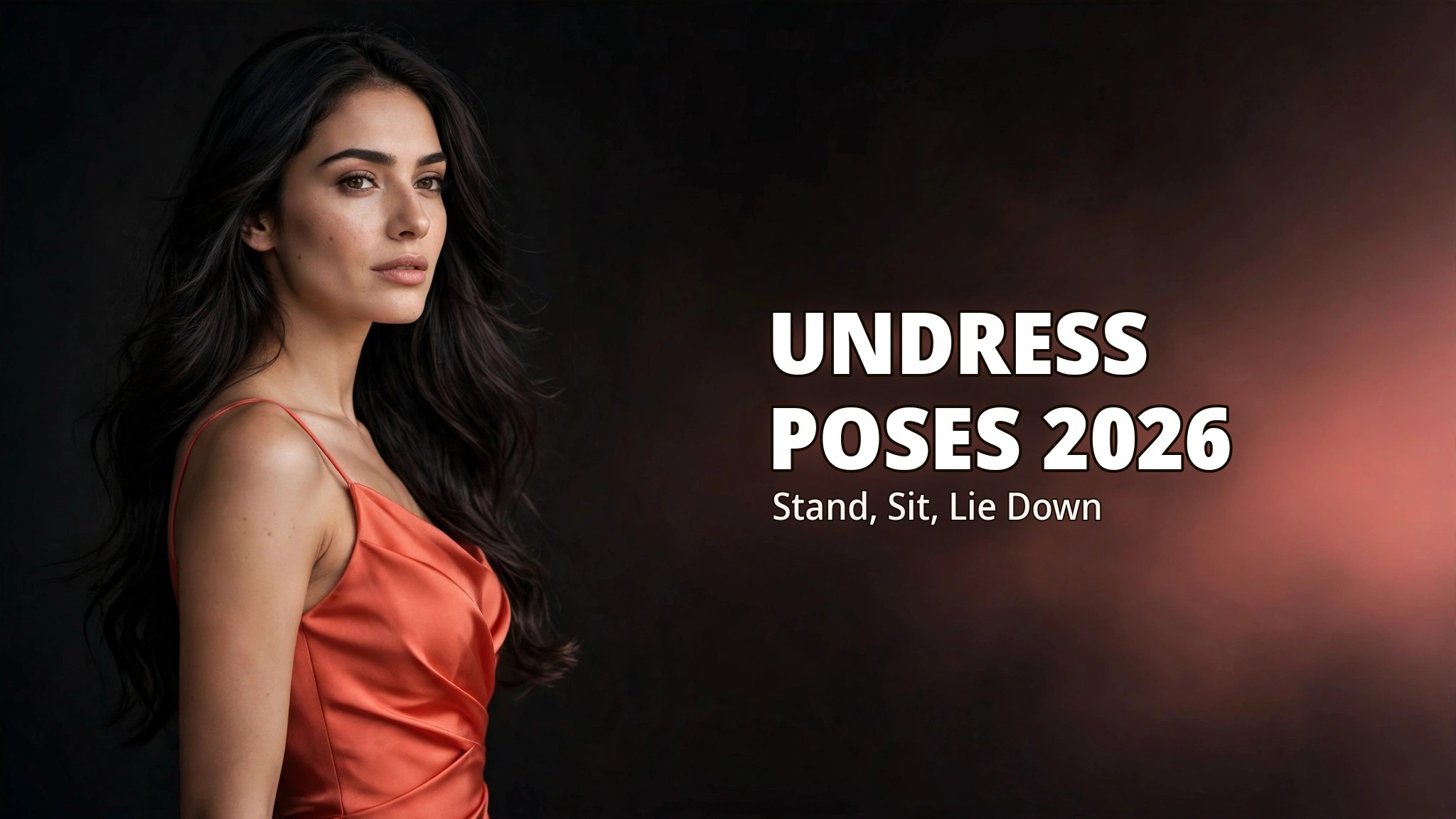
Same person, same clothes, same light — three different poses, three different results. Pose is the variable most people never test, and it changes the undress more than the outfit does. This guide compares the three poses that matter: standing, sitting, and lying down — which one works best, and why. The pose is the input — and the pose is the input before the outfit is.
Quick verdict
Standing wins for full-body clarity, sitting wins for relaxed natural results, and lying down is the hardest pose to get right. Test standing first, then sitting, and save lying down for last. The pose is the input.
In this guide
- 1. Why pose matters more than outfit
- 2. Standing: the clearest pose
- 3. Sitting: the most natural pose
- 4. Lying down: the hardest pose
- 5. Arms, legs, and where they go wrong
- 6. Camera angle: eye level vs above vs below
- 7. The three-pose test, in 15 minutes
- Cost: three poses, three undresses
- 8. Consent: the rule that decides everything
- FAQ
Three poses, side by side
| Standing | Sitting | Lying down | |
|---|---|---|---|
| Body clarity | Best | Good | Weakest |
| Natural feel | Posed | Best | Relaxed |
| Hardest part | Arms | Folded legs | Foreshortening |
| Fails when | Arms cross body | Knees hide torso | Limbs overlap |
| Test order | First | Second | Last |
The table is the whole guide in one place. Three poses, one input, and the input is the three. The rest of this guide is each row in detail: what it does, and what it costs.
1. Why pose matters more than outfit
Pose decides what the model can see. Standing shows the whole body in one plane; sitting folds it in half; lying down flattens it into the floor. The outfit only changes what covers the body — the pose changes the body the model has to draw. The pose is the input, and the input is the pose before the outfit is. The pose is the input because the body is the pose.
And the pose is the truth: a truth does not flatter, and a truth does not lie. A truth says which poses draw cleanly, and which poses draw cleanly is the truth. Check the truth, and the checking is the saving.
And the pose is one tell: one tell, one stand, one sit. One tell is the sit, and the sit is one tell.
2. Standing: the clearest pose
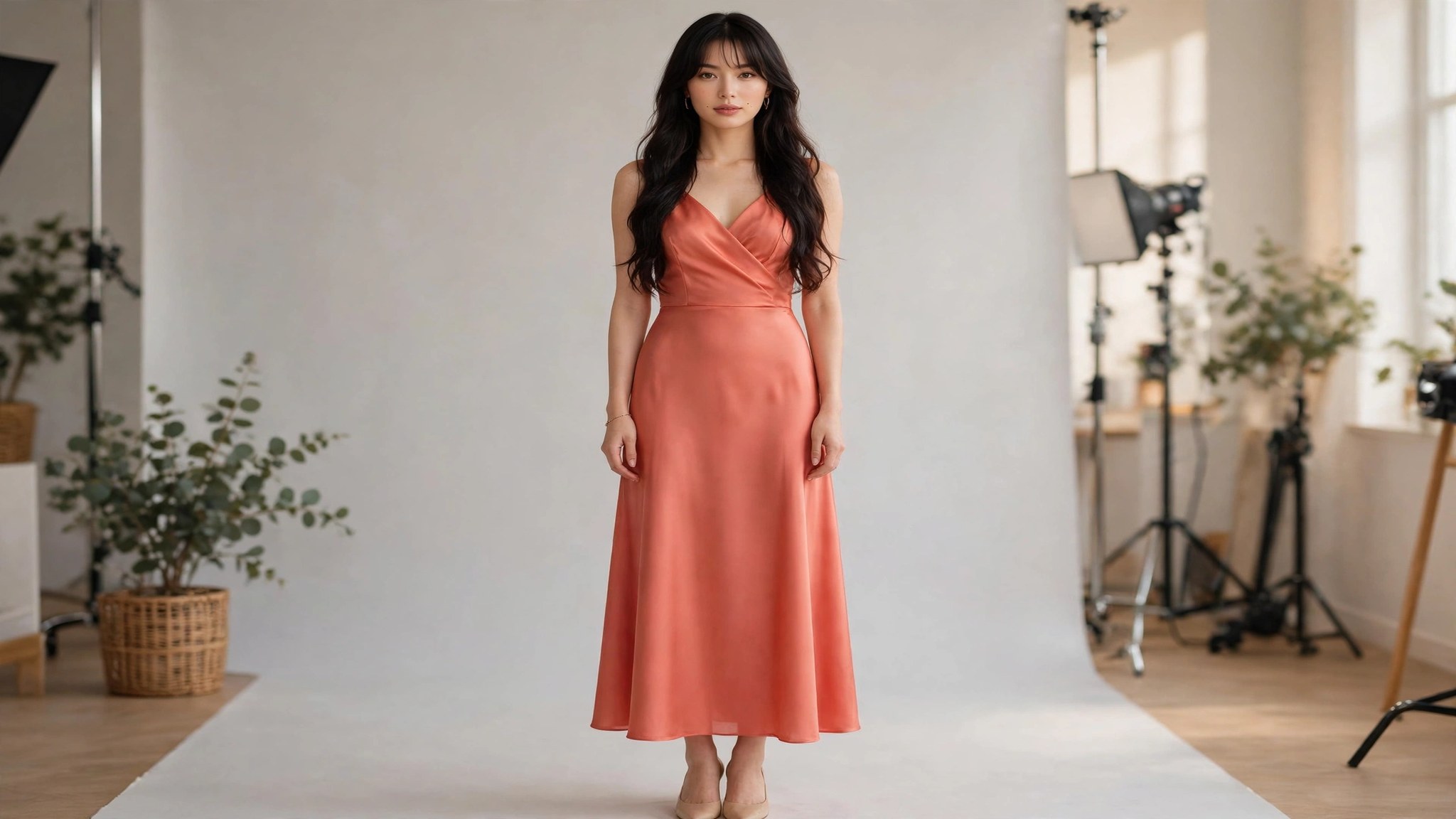
Standing is the clearest pose because the body is fully visible in one plane: head, torso, legs, and arms all face the camera at once, with nothing folded or hidden. Feet flat on the floor, arms relaxed at the sides, shoulders square — the model sees every edge it needs. One pose, one plane, and the plane is one pose. The pose is the input, and the standing is the pose.
And the standing is one tell: one tell, one floor, one side. One tell is the side, and the side is one tell.
And the standing is the habit: a habit that repeats is a habit that teaches, and a habit that teaches is a habit that keeps. Stand first, and the standing is the habit.
3. Sitting: the most natural pose
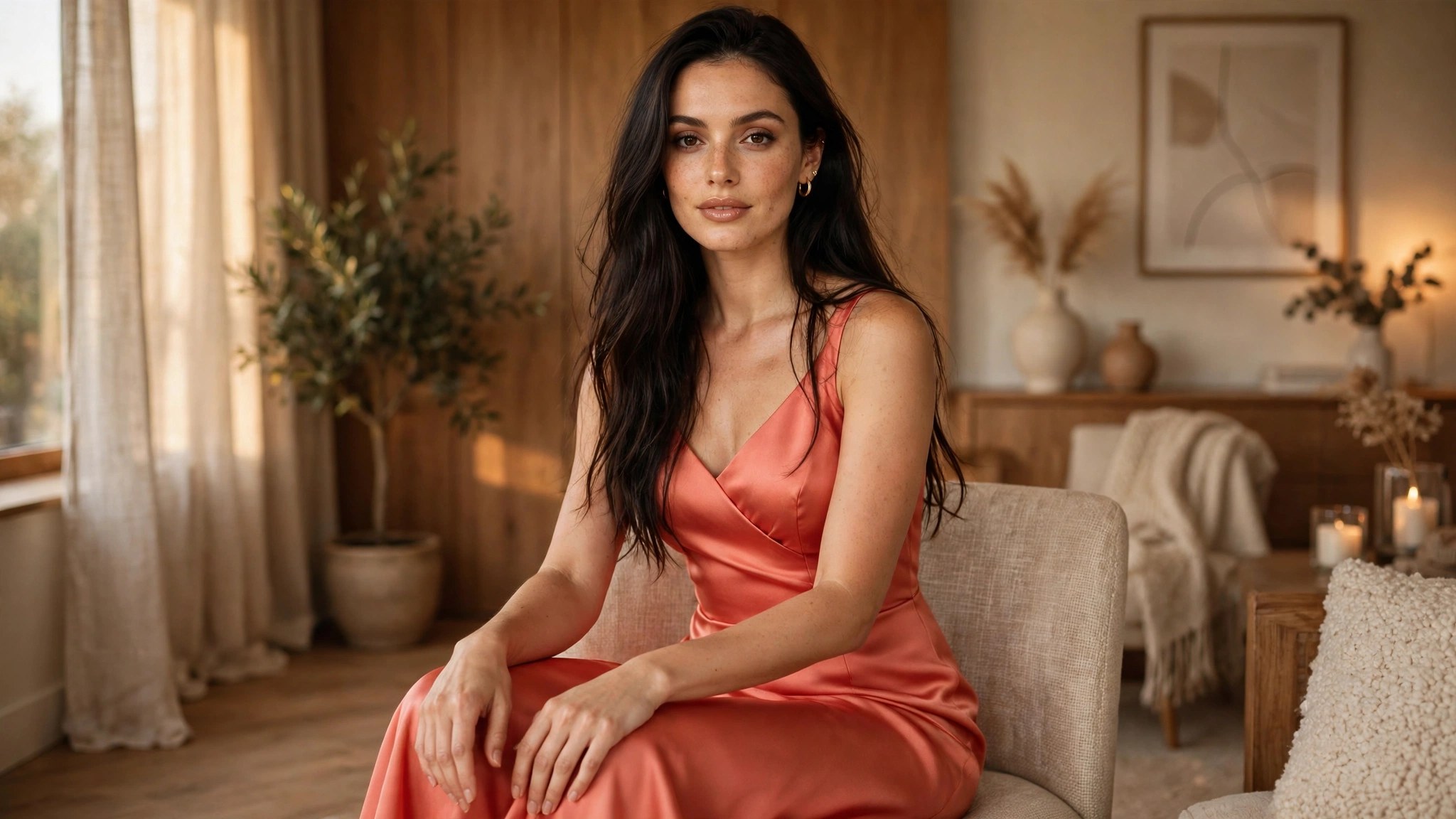
Sitting is the most natural pose because people sit more than they stand for photos — on a chair, on a bed, on a step — and the model has seen millions of sitting photos. The risk is folding: knees that hide the torso, arms that cross the chest, and a lap that swallows the waist. Sit upright, legs uncrossed, hands on knees, and the model sees what it needs. The pose is the input, and the sitting is the pose.
And the sitting is one tell: one tell, one chair, one knee. One tell is the knee, and the knee is one tell.
And the sitting is the proof: a proof that is one is a proof that is clear, and a proof that is clear is a proof that is safe. Check the proof, and the checking is the saving.
4. Lying down: the hardest pose
Lying down is the hardest pose because of foreshortening: the body points at the camera, so the feet look huge and the head looks small, and the model has to guess depth it cannot see. Limbs overlap, the torso compresses, and the floor becomes part of the body. Test it last, shoot from the side rather than the foot of the bed, and expect one retry. The pose is the input, and the lying is the pose.
And the lying is one tell: one tell, one floor, one foot. One tell is the foot, and the foot is one tell.
And the lying is the habit: a habit that repeats is a habit that teaches, and a habit that teaches is a habit that keeps. Test last, and the testing is the habit.
5. Arms, legs, and where they go wrong
Arms and legs go wrong the same way in every pose: they cross the body and hide what the model needs to see. Arms crossed over the chest hide the torso; legs crossed over each other hide the hips; a hand on a hip hides the waist. Keep limbs at the sides, uncrossed, with space between arm and torso — the gap is the edge the model follows. The pose is the input, and the limbs are the pose.
And the limbs are one tell: one tell, one arm, one leg. One tell is the leg, and the leg is one tell.
And the limbs are the proof: a proof that is one is a proof that is clear, and a proof that is clear is a proof that is safe. Check the proof, and the checking is the saving.
6. Camera angle: eye level vs above vs below
Camera angle is pose’s quiet partner: eye level keeps proportions honest, shooting from above shortens the legs, and shooting from below stretches them. For a standing pose, shoot at chest height; for sitting, shoot at eye level with the seated person; for lying down, shoot from the side at floor level. One angle, one body, and the body is one angle. The pose is the input, and the angle is the pose.
And the angle is one tell: one tell, one eye, one chest. One tell is the chest, and the chest is one tell.
And the angle is the habit: a habit that repeats is a habit that teaches, and a habit that teaches is a habit that keeps. Shoot level, and the shooting is the habit.
7. The three-pose test, in 15 minutes
Fifteen minutes, three poses: five minutes to shoot standing, five to shoot sitting, five to shoot lying down — same person, same clothes, same light, same camera height. Run one undress on each, compare the three, and keep the pose that drew cleanest. Three poses, one test, and the test is the three. The pose is the input, and the test is the pose.
And the test is one test: one test, one person, three poses. One test is the poses, and the poses are one test.
And the test is the habit: a habit that repeats is a habit that teaches, and a habit that teaches is a habit that keeps. Test three, and the testing is the habit.
Cost: three poses, three undresses
One undress is 21 credits — roughly $0.42 on the $19.99 pack and $0.25 on the $59.99 pack. Three poses is 63 credits — roughly $1.26 on the $19.99 pack and $0.76 on the $59.99 pack. If one pose needs a fix, an image-to-image edit is 49 credits — roughly $0.98 on the $19.99 pack and $0.59 on the $59.99 pack. Prices checked 13 Nov 2026; the generator shows the exact cost before you run it, so the price is never a surprise.
And that is why three poses is the saving: a test that is three is a test that is kept, and a test that is kept is a test that is three. Test three, and the testing is the saving.
The free baseline still stands: free access lets you try the core features without a subscription. Start free, and the starting is the testing.
8. Consent: the rule that decides everything
Only generate images of yourself, or of fictional adults. Never generate an image of a real person without their consent — not a celebrity, not an acquaintance, not a stranger. Non-consensual generation is not allowed, and a generated image is harder to take back than a photo once shared. The tool is built for your own images and fictional adults, and that boundary is absolute.
This is also practical, not just ethical: images made with consent are usually better inputs and better results. They are shot properly, well lit, front-facing — because the person knew they were being photographed. A stolen or secret photo is usually dark, cropped, or shot from a bad angle, which is also a bad input. Consent and quality point the same way — and safety is the proof: a site that enforces consent is a site that teaches, and a site that teaches is a site that keeps.
FAQ
Which pose works best for AI undress?
Standing, for full-body clarity — the whole body is visible in one plane with nothing folded or hidden. Sitting is the most natural, lying down is the hardest.
Why does lying down fail so often?
Foreshortening: the body points at the camera, so the feet look huge and the head looks small, and the model has to guess depth it cannot see. Shoot from the side rather than the foot of the bed.
Where should my arms be?
At your sides, uncrossed, with space between arm and torso. Arms crossed over the chest hide the torso, and the gap between arm and torso is the edge the model follows.
What camera height should I use?
Eye level keeps proportions honest. For standing, shoot at chest height; for sitting, at eye level with the seated person; for lying down, from the side at floor level.
How much does testing three poses cost?
Three undresses is 63 credits — about $1.26 on the $19.99 pack and $0.76 on the $59.99 pack. One undress is 21 credits.
Can I make AI undress images of a real person?
No. Only generate images of yourself, or of fictional adults. Generating an image of a real person without consent is not allowed.
Final verdict
Standing wins for full-body clarity, sitting wins for relaxed natural results, and lying down is the hardest pose to get right. Test standing first, then sitting, and save lying down for last. The pose is the input.
Keep reading
- What to Wear for AI Undress: How Each Garment Changes the Result (2026)
- AI Undress Results by Body Type: What Changes and What Doesn’t
- Undress for Video: Stills vs Clips, and How a Still Becomes a Clip