

حكم سريع: The crop is not a step you take after the photo. It is the first decision, and it decides the undress before the model ever sees it. Wide or tight, portrait or landscape, headroom or none — each choice hands the model a different amount of body, background and context to work with, and the result changes with it. Get the crop right and the same prompt, the same photo and the same 21 credits produce a better result. Get it wrong and no prompt will save it.
Contents:
- 1. The Crop You Chose Before You Started
- 2. Wide or Tight: What the Frame Decides
- 3. The Headroom Rule (and When to Break It)
- 4. Where the Body Meets the Edge
- 5. Two People, One Frame
- 6. Portrait, Landscape, or Square
- 7. Background: Half the Result, Decided by the Crop
- 8. A Crop Checklist Before You Generate
- 9. What It Costs
- 10. Honest Limitations
- 11. Consent and Safety
- 12. Who This Is For
- 13. الأسئلة الشائعة
1. The Crop You Chose Before You Started
Every undress begins with a photo that was already cropped — by the camera, by the photographer, by the app that saved it. Most people never think about that crop. They upload the photo they have and start tuning the prompt. But the prompt is the second input. The crop is the first, and it decides what the model can even see.
This article is about the last clean input variable in the workflow. Pose, الضوء, background and clothing were covered in earlier articles; the crop is what is left. It is also the cheapest variable to test: cropping costs nothing, and a re-crop is free, while every generation costs 21 الأرصدة. Test the crop first, pay for the generation second.
2. Wide or Tight: What the Frame Decides
A wide crop gives the model the whole body, the room, and the light that falls across both. That is a lot of information, and it is why wide crops produce the most stable results: the model has context for every part it has to draw. The cost is size. A wide crop makes the body small in the frame, and small bodies mean small detail — faces soften, hands blur, skin texture fades.
A tight crop does the opposite. It gives the model a big body and almost no context. Detail improves — skin, hands and face get the resolution they need — but the model has to invent everything it cannot see. A tight crop that cuts the body at the waist is asking the model to guess what is below the frame, and guesses are where anatomy fails. The rule of thumb: the tighter the crop, the more the model invents, and the more it invents, the more it can get wrong.
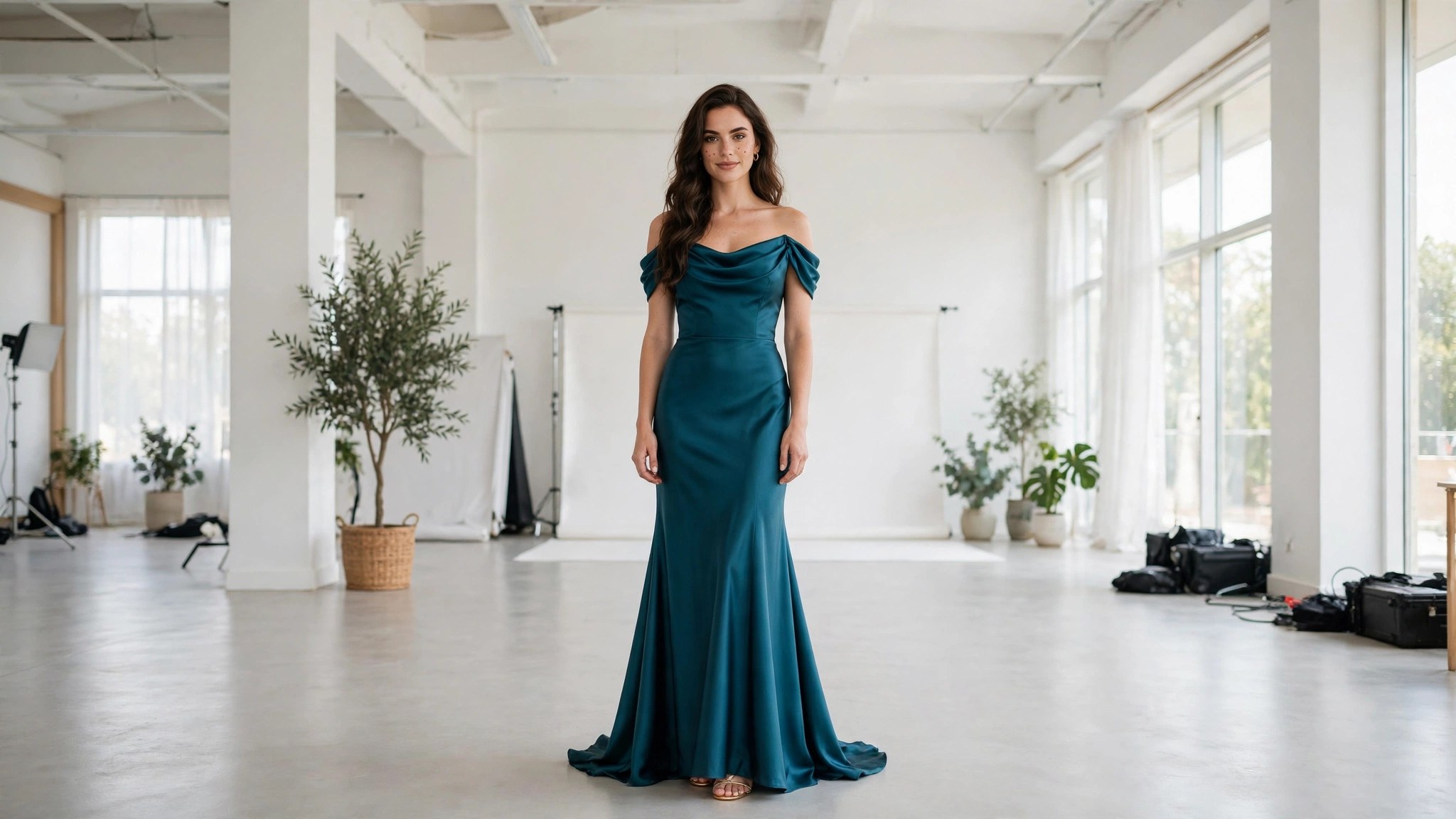
The practical middle ground is a three-quarter crop: head to knees, or head to mid-thigh, with a little room on every side. It keeps the body large enough for detail and small enough for context. If you only change one thing about your photos this week, change the crop to three-quarter.
3. The Headroom Rule (and When to Break It)
Headroom is the space between the top of the head and the top of the frame. Too much of it makes the subject look small and lost. Too little of it — a head touching the frame edge — makes the viewer uneasy, and it makes the model uneasy too: hair cut off by the frame is hair the model will try to complete, and it will complete it differently every time.
Leave about a hand’s width of space above the head. That is enough for the model to know where the head ends and the background begins, and it keeps the face large enough to matter. The exception is a deliberate tight portrait, where the top of the head is cut on purpose and the crop is about the face, ليس الجسم. A deliberate cut reads as a choice. An accidental cut reads as a mistake — and the model treats it as one.
4. Where the Body Meets the Edge
Every edge of the frame is a decision about where the body ends. Cut at a joint — elbow, knee, wrist, ankle — and the cut reads as amputation, even in a clothed photo. The eye expects a joint to be whole, and a frame that slices through one looks wrong before the generation even starts.
Cut between joints instead: mid-forearm, mid-shin, mid-thigh. The body reads as complete even when it is not, because the cut happens where the body is simple and straight. This is an old photography rule, and it matters more for undress work than for ordinary photos, because the model uses the visible body to infer the hidden one. A clean cut gives it a clean inference. A cut through a joint gives it a puzzle.
Feet deserve the same care. A foot half-cropped by the bottom edge is the single most common crop error in this workflow, and it is the one that produces the most extra toes. Either include the feet fully, with room to spare, or crop above the ankle on purpose. Never leave half a foot in the frame.
5. Two People, One Frame
Two people in one frame is a crop problem before it is a generation problem. The frame has to fit two bodies, and fitting two bodies usually means each one gets half the resolution. Faces shrink, hands shrink, and the model has to keep two anatomies straight at once. The earlier article on two people in frame covered the generation side; this is the crop side.
The rule is simple: if both people matter, the frame must be wide enough for both at three-quarter length or better, and neither person should be cut by the edge. If the photo cannot fit both people cleanly, crop to one person and generate that one. A clean single-person crop beats a cramped two-person frame every time, because the model gets a full body to work from instead of two half-bodies.
6. Portrait, Landscape, or Square
Orientation is a crop too, and each one changes what the model sees. Portrait (tall) suits a single body standing or sitting: it fits the body’s natural shape and leaves the background to the sides. Landscape (wide) suits a body lying down, two people, or a scene where the room matters. Square is the compromise that suits nothing perfectly and nothing badly.
The mistake is to force a photo into the wrong orientation. A standing body squeezed into a landscape frame gets tiny and lost, with dead space on both sides that the model fills with invented background. A lying body forced into a portrait frame gets cropped at the knees or the feet. Match the orientation to the pose before you generate: standing goes portrait, lying goes landscape, and square is for the cases where you genuinely do not know yet.
7. Background: Half the Result, Decided by the Crop
An earlier article said the background is half the result. The crop decides how much of that half the model gets. A wide crop includes the room, the window, the light and the clutter — all of which the model has to render and keep consistent. A tight crop cuts the background out almost entirely, and with it goes half the work.
That is why tight crops look cleaner: there is simply less background to get wrong. But it is also why they look flatter. The background is what makes a result look like a photo of a person in a room, rather than a person floating on a backdrop. The three-quarter crop is the balance again — enough room to feel real, not so much room that the room becomes the problem.
When you test crops, test the background with them. Run the same photo wide and tight and compare the backgrounds, not just the bodies. The wide one will tell you what the room really looks like. The tight one will tell you what the body really looks like. The crop you keep is the one where both look right.
8. A Crop Checklist Before You Generate
Run this on the photo before you spend credits. Any two failures mean re-crop first.
| تحقق | Pass | Fail |
|---|---|---|
| Length | Three-quarter or full body | Cut at the waist with no reason |
| Headroom | About a hand’s width above the head | Head touching the frame edge |
| Joints | Cuts between joints | Cuts through elbow, knee, wrist or ankle |
| Feet | Fully in frame, or cropped above the ankle | Half a foot at the bottom edge |
| Orientation | Matches the pose | Standing body in landscape, or lying body in portrait |
| Background | Enough room to feel real, not so much it dominates | Cluttered room or no background at all |
| Two people | Both fully in frame at three-quarter or better | One person cut by the edge |
Seven checks, thirty seconds, and the crop is the result — a re-crop costs nothing, and it is the cheapest improvement in this workflow.
9. What It Costs
الأسعار تم التحقق منها 13 نوفمبر 2026. Only the numbers below are used in this article; they are the platform’s published credit prices.
An undress costs 21 الأرصدة. A standard text-to-image result costs 6 الأرصدة. At the $19.99 باقة ($0.020 per credit), an undress is $0.42 and a standard image is $0.12. At the $59.99 باقة ($0.012 per credit), the same two cost $0.25 و $0.07.
Five crops of the same photo, undressed one by one, is 105 الأرصدة ($2.10 / $1.26). Three crops compared side by side is 63 الأرصدة ($1.26 / $0.76). A full crop test — five undress crops plus two standard reference images — is 117 الأرصدة ($2.34 / $1.40). That is the honest price of finding the right frame, and it is cheaper than running one bad crop five times hoping for luck.
The packs: $19.99 buys 1,000 credits and $59.99 buys 5,000 الأرصدة, both one-time purchases with instant credit. The annual packs are $119.88 و $359.88, paid once and delivered monthly across 12 months. There is no auto-renewal wording on these packs, and no $199 pack exists yet.
10. Honest Limitations
A crop cannot fix a bad photo. If the original is blurred, badly lit or low resolution, no framing will give the model the detail it needs. Cropping can only choose what the model sees; it cannot create information that was never in the photo. A tight crop of a blurry photo is still a blurry photo, only bigger.
Cropping also cannot fix a pose. A pose that hides the hands, twists the torso or puts the body at a strange angle will still hide, twist and confuse after the crop. The crop is the last clean variable, not a magic one. Use it after the photo is good, not instead of a good photo.
11. Consent and Safety
Only undress photos of yourself or of fictional adults you created. Never undress a real person who did not agree to it, and never undress a photo of a minor — real or realistic — under any circumstances. The crop does not change the consent rule: a tight crop of a non-consenting person is still a non-consenting person. Label every result as AI-generated, and never share a result of a real person who did not agree to it.
12. Who This Is For
This article is for you if your undress results are inconsistent and you have been blaming the prompt. Try the crop first. It is the variable you have been skipping, it costs nothing to test, and it is the one change that improves every result that follows. The checklist in section 8 is the whole article in one table; everything else is the reasoning behind it.
Skip it if your photos are already well-framed three-quarter shots with clean cuts and a hand’s width of headroom. You are already doing it right, and your remaining problems are elsewhere — in the pose, the light, or the prompt.
13. الأسئلة الشائعة
What is the best crop for an undress?
A three-quarter crop: head to knees, or head to mid-thigh, with a little room on every side. It keeps the body large enough for detail and small enough for context, and it is the crop that fails least often across the whole workflow.
Why do my tight crops produce extra fingers or toes?
Because a tight crop makes the model invent everything it cannot see, and the more it invents, the more it can get wrong. Hands and feet are the first parts to fail when the model is guessing. Loosen the crop to three-quarter length and give the model the full hands and feet to work from.
Should I crop before or after generating?
قبل. The crop is the first input the model sees, and it decides what the model can draw. Cropping after generation only cuts a result that was already shaped by the wrong frame. Re-crop the photo, then generate.
Does orientation really change the result?
نعم. A standing body in a landscape frame gets small and lost, and the model fills the dead space with invented background. A lying body in a portrait frame gets cropped at the knees or feet. Match the orientation to the pose: standing goes portrait, lying goes landscape.
How much headroom should I leave?
About a hand’s width above the head. Less than that and the hair gets cut by the frame edge, which the model will try to complete differently every time. More than that and the subject looks small and lost in the frame.
Is cropping a photo of someone else still an undress of them?
نعم. The crop does not change the consent rule. Only undress photos of yourself or of fictional adults you created, and never undress a real person who did not agree to it, whatever the crop.
تابع القراءة:
- Two People in Frame: AI Undress When the Photo Is Not Solo
- Same Photo, Five Undresses: What Changes and What Does Not
- The Background Is Half the Result: Rooms, الضوء & Setting
Undress results start on the التعرية بالذكاء الاصطناعي page. This site offers a free preview per IP.